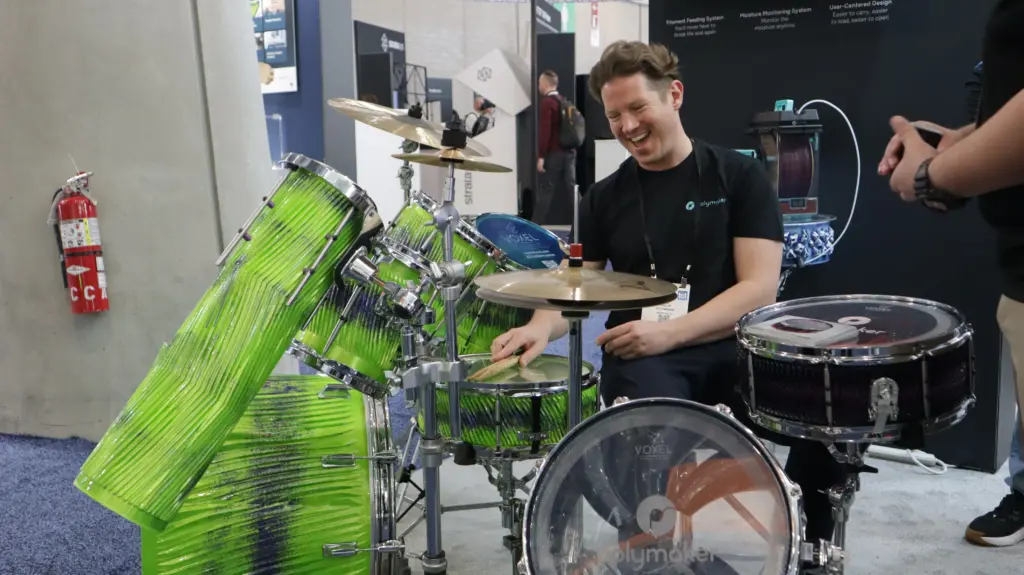
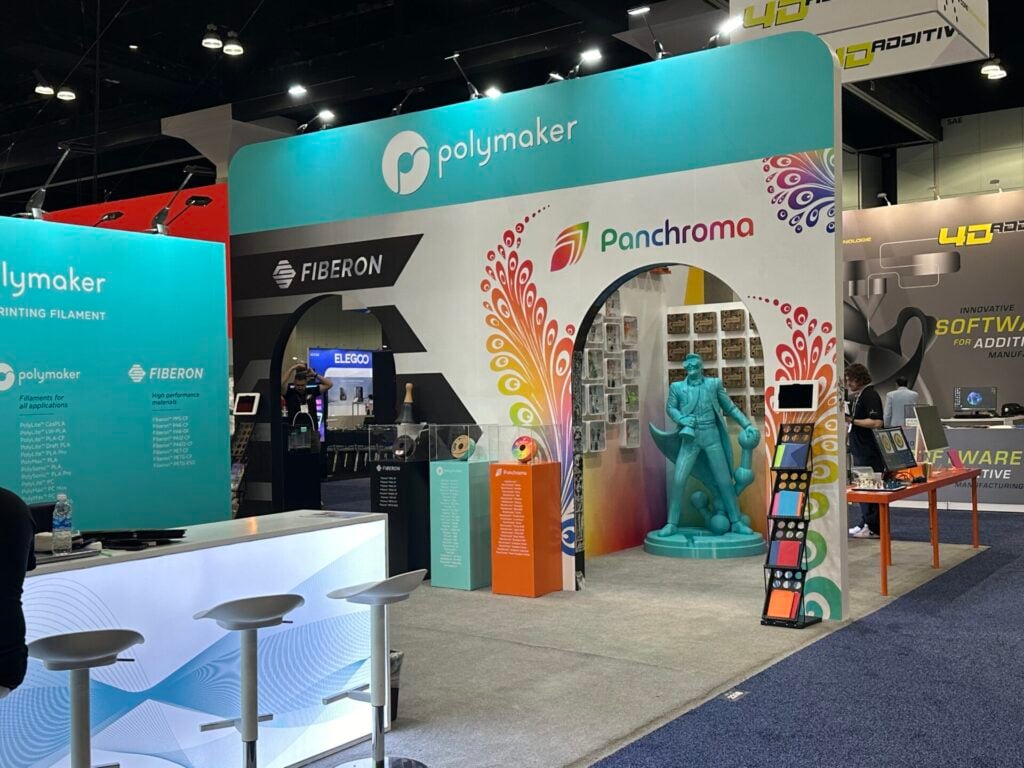
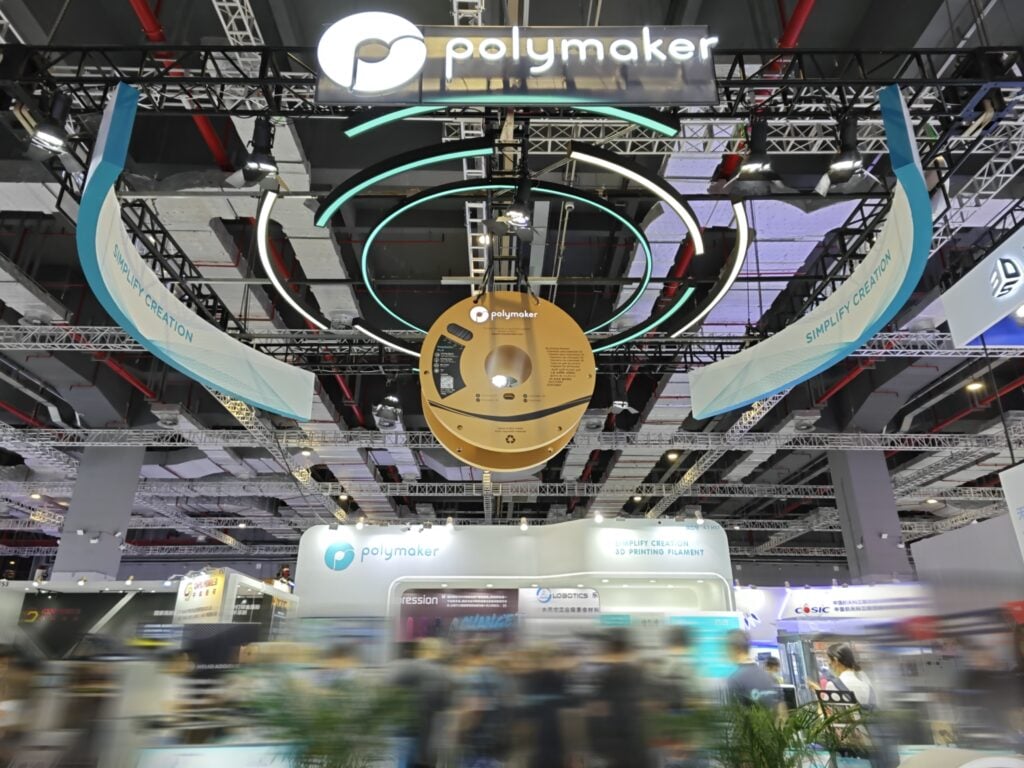
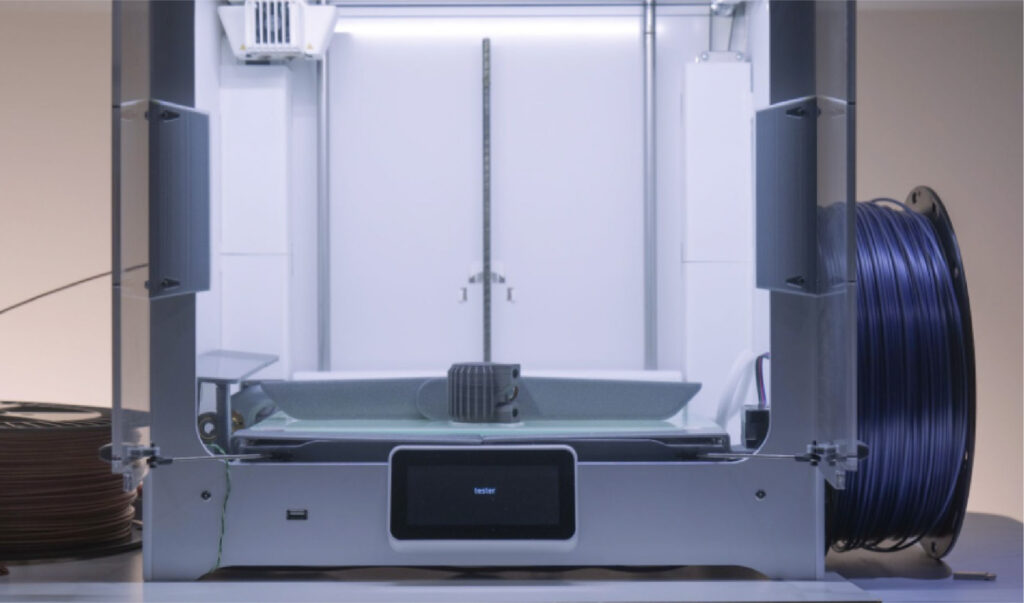
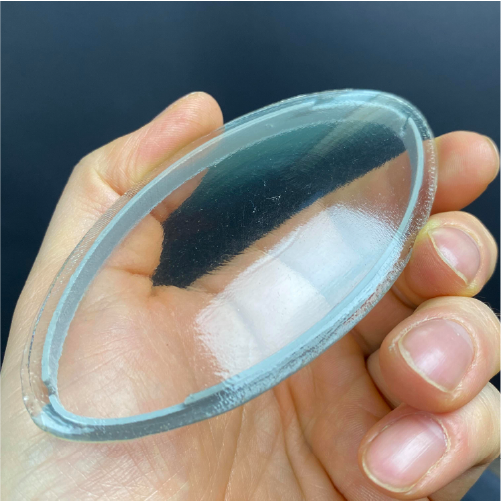
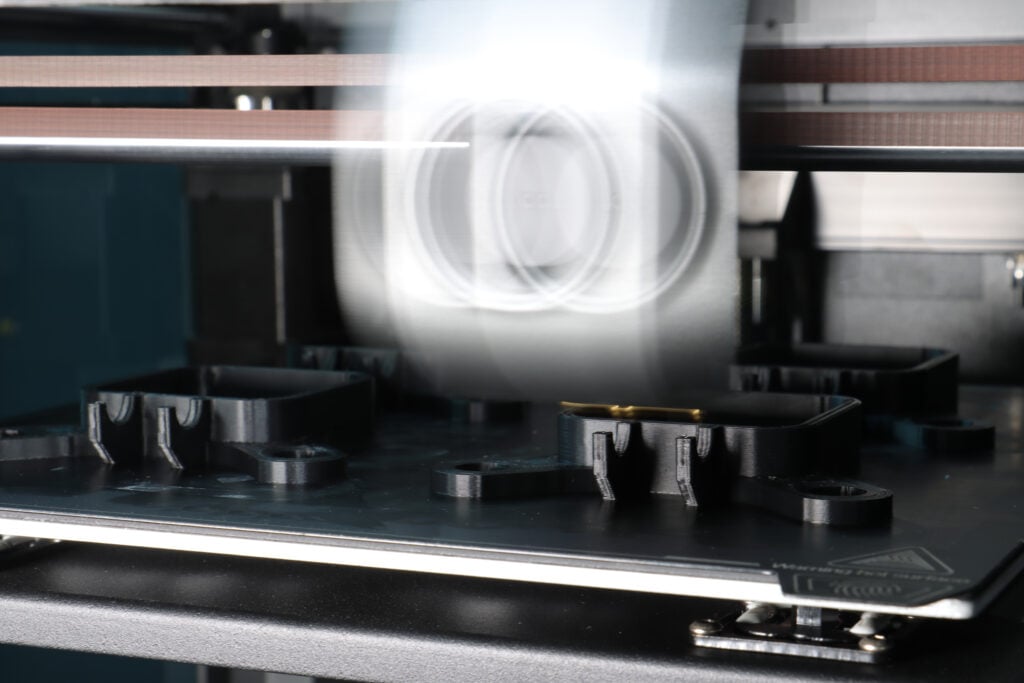
Walk the floor of Rapid Show 2026 and you’ll pass aerospace prototypes, medical device components, and industrial tooling. Then you’ll hear something completely out of place: a full drum kit. Not a model. Not a concept. A real, playable, gig-ready drum kit printed almost entirely from PLA filament. This drum kit was created using a 3d printer, with each drum shell built layer by layer on the build plate. The workspace where functional objects like these take shape.
That’s Voxel Percussion. While 3D printers are often used to create household gadgets and practical items for the home, here they’re used to produce a full drum kit, showcasing the versatility of 3D printing. Marcus, who lives in Berlin and enjoys music and electronics outside of his professional work, is a focused innovator in 3D printing applications. He noticed the untapped potential of 3D printing for musical instruments and personally prefers to experiment with unconventional designs. Printing drum shells can take anywhere from 2 to 7 hours depending on drum size, with costs ranging from $10 to $70 per shell. 3D printed drum shells can take between 2 to 7 hours to print, depending on the size of the drum, with snare drums typically taking around 2 hours and bass drums taking up to 6-7 hours. Using reprocessed materials can make it 5-10 times cheaper, allowing makers to save significant money on each project.
This is possibly the most unique 3D printed instrument you’ll find at the show, and the content shared here aims to inspire others to explore similar 3D printing projects.
Marcus didn’t come to 3D printing with a factory behind him. As a small business owner, he was working with open-frame printers, no enclosures, no industrial-grade hardware, no massive materials budget. The kind of setup many hobbyists and makers in the early stages of their 3D printing journey know well, working with basic details and constraints, and needing to minimize the effort required to build something impressive with limited resources.
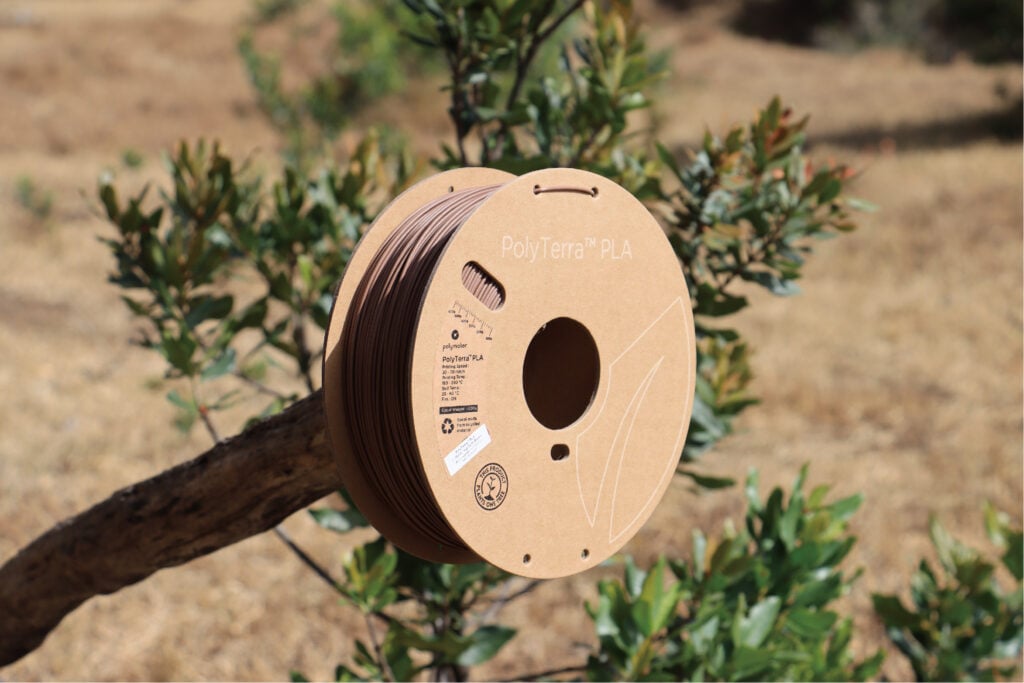
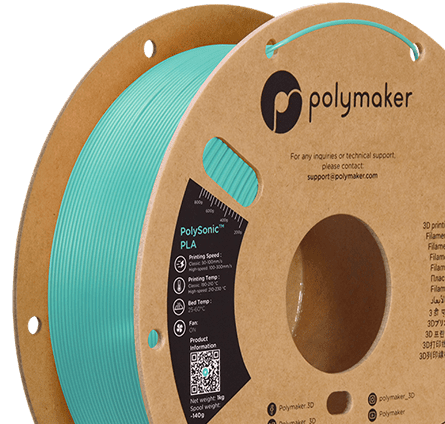
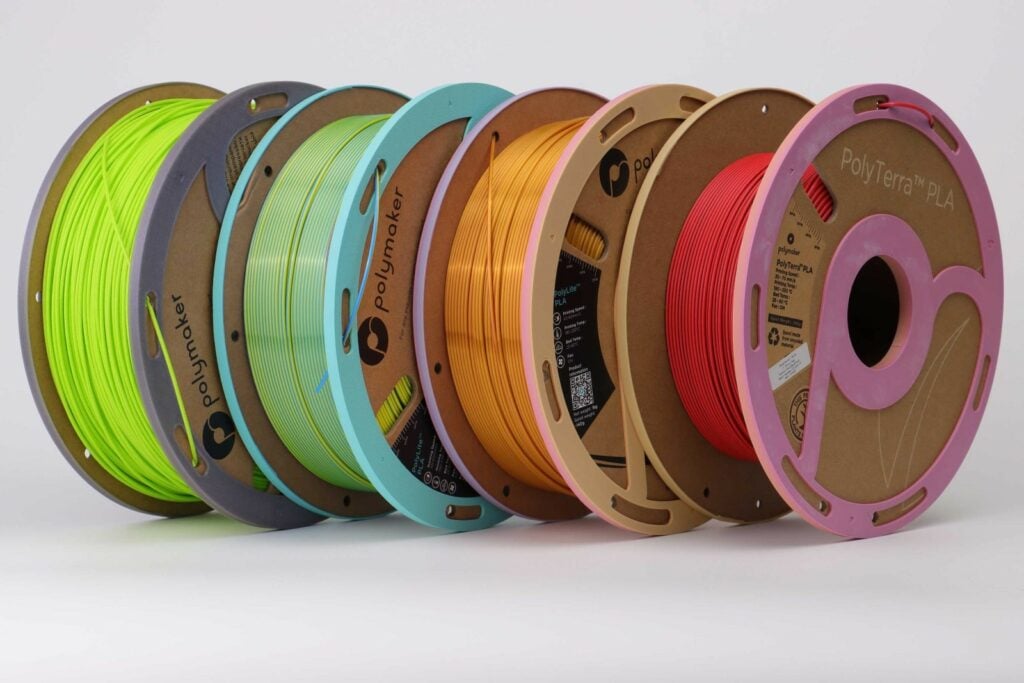
That constraint shaped everything. PETG was tested and ruled out. Higher-performance engineering materials were out of reach for the volume and machine type he was running. So Marcus landed on Polymaker PLA, specifically PolyMax Pro and Panchroma Silk, and then did something clever: he engineered around the material’s limitations rather than fighting them. PLA (Polylactic Acid) is a popular bioplastic used in 3D printing, especially for beginners and hobbyists, due to its ease of use and low cost.
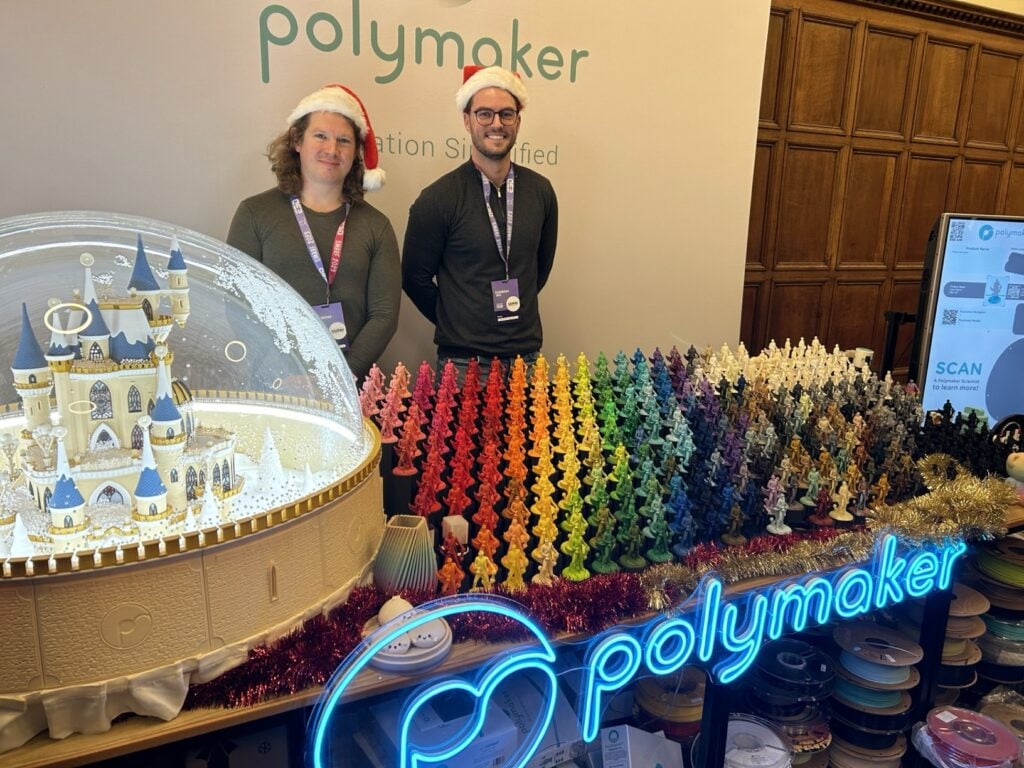
The result is a drum kit that stops people in their tracks at one of the most technically demanding trade shows in additive manufacturing. As Marcus laughed at the booth, “whether they like it or not” , everyone at Rapid Show 2026 knows about Voxel Percussion.
For more inspiration, check out the collection of Voxel Percussion models and more projects to expand your 3D printing horizons.
PLA is the filament most people associate with desk toys and phone stands, not musical instruments that need to survive a drummer’s punishment and withstand the forces generated during drumming. While PETG was tested and ruled out for this project, it’s worth noting that PETG (Polyethylene Terephthalate Glycol) is known for its durability and chemical resistance, making it a preferred choice for functional prints that require strength and flexibility, especially when exposed to heat and moisture, similar in spirit to how high-temperature HT-PLA filaments are engineered for demanding thermal environments. Nylon is another strong and flexible material used in 3D printing, ideal for parts that demand high durability and wear resistance, such as mechanical components. Reinforced composites, like carbon-fiber and glass-fiber infused filaments, are also used to enhance the mechanical properties of 3D printed parts for engineering applications. The honest answer for why PLA worked here comes down to post-processing.
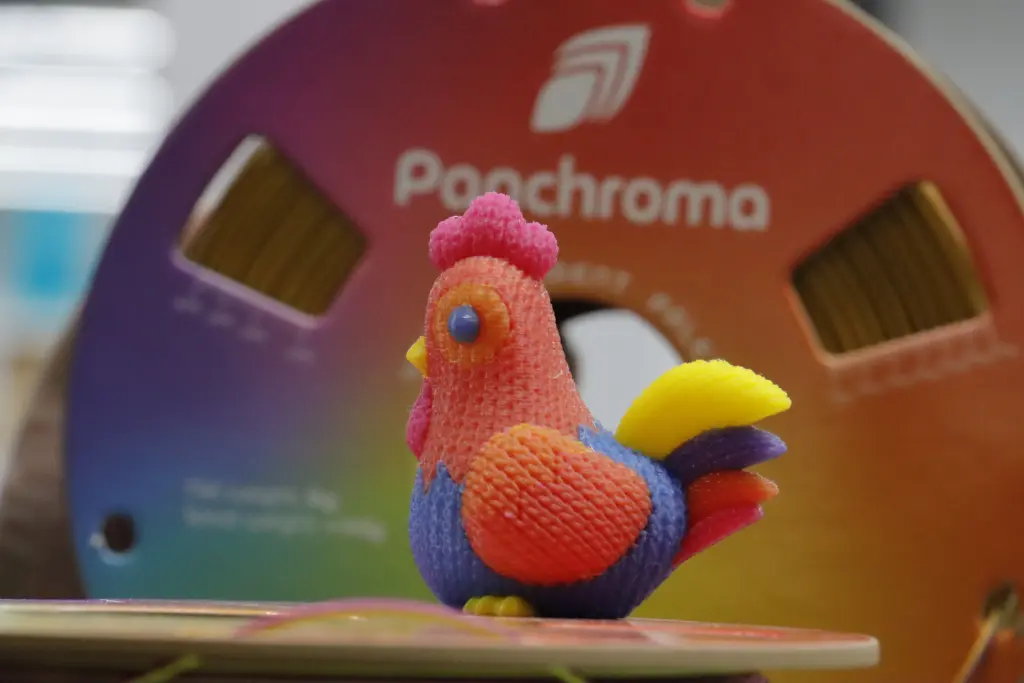
After printing, each shell goes through a strengthening treatment that Marcus developed specifically for Voxel drums. This process includes the controlled application of heat to improve the functionality and appearance of the shells, and also produces the high-gloss sheen on the finished kit, transforming an accessible material into something structurally sound and visually striking. Support structures play a crucial role during 3D printing, especially for complex shapes, ensuring stability and successful prints. The Panchroma Silk finish handles the aesthetic side, with its gradient and multicolor properties giving each drum its base character before Marcus hand-paints every shell individually. No two drums are identical. As he puts it, each one is “a little art piece.”
The fundamental shape of a drum shell hasn’t changed much in decades. A cylinder. Air moves in a straight column when the head is struck, producing the tone you hear. Marcus asked a simple but disruptive question: what if we changed the way that air moves?
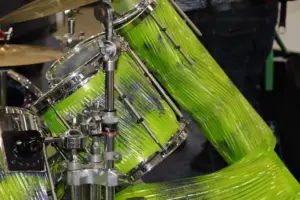
The answer is the Vortex, a shell design with six strategically placed holes that twist the air column as it travels through the drum. The unique angles and geometric divisions of the shell not only create a visually striking appearance but also influence how sound waves interact within the drum, affecting its acoustic properties. When you view the shell from different angles, the complexity and innovation of its design become even more apparent. Instead of a straight flow, the air spirals slightly, and the acoustic effect is real and measurable. It performs particularly well on microphones, producing a richer, more defined sound capture.
This is additive manufacturing doing what it does best, enabling geometry that would be impractical to produce with traditional methods. You can’t easily CNC a twisted internal airflow channel into a wooden drum shell. You can absolutely print one. After printing, it’s important to inspect the shells to ensure quality, smooth assembly, and proper function. The sound characteristics of 3D printed drum shells can be similar to traditional shells, but they may exhibit slightly less sustain due to their shape and design, which can dampen sound reflections.
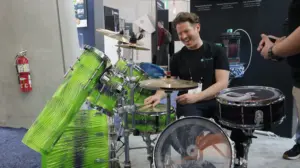
The Vortex isn’t the only acoustic tool in Marcus’s kit. Voxel drums also incorporate laser-cut inserts that ricochet the air column back toward the player, adding what Marcus describes as “a little bit of a mid-body” to the tone. Subtle, yes, but in drumming, subtle is often the difference between a kit that sounds good and one that sounds right.
The combination of printed shells, post-processed PLA, geometric airflow engineering, and hand-painted finishes puts Voxel in an unusual position: a manufactured product that’s also a handcrafted instrument. Assembly of the drum kit involves carefully fitting together the printed shells, laser-cut inserts, and other components, with the mechanical parts often housed in a dedicated box that protects and organizes them for optimal sound and smooth operation. The development of 3D printed drum pedals has seen multiple iterations, with one designer currently on their ninth version, aiming to match the feel of traditional pedals available on the market. Earlier versions often failed to provide a responsive feel, but significant improvements have been made over time, including the introduction of short board versions and belt-driven mechanisms to cater to different drummer preferences. Eventually, further refinements and new features are expected as the design process continues to evolve.
In the fast-moving world of 3D printing, staying ahead of the curve is as important as the initial spark of inspiration. When you create a project like a drum kit, it’s not just about making something that works today. It’s about building with tomorrow in mind. That’s where the true power of 3D printing technology comes into play. By focusing on designs that are both functional and adaptable, makers can ensure their creations won’t collect dust as trends and tools evolve.
The secret lies in choosing the right materials and embracing a flexible design mindset. Solid, reliable filaments like Polymaker’s PLA provide a strong foundation, but the real magic happens when you design with future upgrades in mind. Need to tweak the shell shape for a new sound? Want to test a different airflow concept or add new features? With 3D printing, you can iterate quickly, swap out parts, and refine your model without starting from scratch. This approach not only extends the life of your project but also keeps it relevant as new ideas and technologies hit the market.
By staying connected to the latest advances in 3D printing materials like Polymaker’s filament portfolio and design software, creators can keep their projects at the cutting edge. It’s a mindset that values continuous improvement, always looking for ways to push boundaries and prove what’s possible. In the world of 3D printed drums, that means every beat is a step toward the next breakthrough.
One of the most exciting aspects of 3D printing is the sheer range of customization options it unlocks. No longer limited to off-the-shelf solutions, creators can design every detail of their drum projects to match their personal style and musical needs, or even branch out into fun, interactive objects like a toy drum or other printable toys. Want a drum head with a unique pattern, a stand that fits perfectly in your studio, or shells in shapes and colors no one else has? With the right tools and materials, the possibilities are nearly endless.
3D printing technology puts the power to create directly in the hands of musicians and makers. You can experiment with different materials like glossy silks, reinforced composites, or even professional-grade options such as PolyLite PLA Pro, to achieve the exact look and feel you want. Adjust the size, tweak the geometry, or add custom features that make your drum kit truly one-of-a-kind. Whether you’re building for the stage, the studio, or your own living room, you have the freedom to shape your project to fit your world.
This level of personalization isn’t just about aesthetics, it’s about making instruments that inspire. When you see your own ideas come to life, supported by the latest 3D printing tools and materials, it opens up a world of creative possibilities. That’s the real beauty of additive manufacturing: every project can be as unique as the person behind it.
A drum kit might look stunning on a website or in a display case, but the real test comes when it’s put to use. In the world of 3D printing, functionality and usability are the ultimate benchmarks. It’s not enough for a project to be visually impressive, it has to perform, day in and day out, in the hands of real musicians.
That’s why material selection and thoughtful design are so critical. Using high-quality filaments and engineering-grade materials ensures that each component can withstand the rigors of live performance, studio sessions, and everyday practice. Ergonomics matter too: a drum that feels right under the sticks, with responsive heads and sturdy stands, makes all the difference for players at every level.
But usability goes beyond durability. It’s about creating a project that fits seamlessly into the musician’s world, whether they’re a touring professional or a hobbyist playing at home. By listening to feedback, testing under real-world conditions, and refining every detail, 3D printing enthusiasts can deliver instruments that not only look the part but sound and feel exceptional.
In the end, a well-designed 3D printed drum project is a tool that elevates creativity, inspires new sounds, and proves that additive manufacturing has a place on the world’s biggest stages.
The snare drums run at 14×5.5” and 14×6.5” configurations, toms are 8”, 10”, and 12”, and the kit features both a 22” octagonal shell and a 22” kick drum. The unique angles of the octagonal shell not only define its striking appearance but also influence its acoustic properties, creating resonance characteristics that differ from traditional round shells. Viewing the shell from different angles highlights its distinctive geometry and the interplay of light and shadow across its surfaces. These key details are essential for those interested in the technical aspects of the kit.
Marcus’s kit is a live demonstration that material constraints don’t have to be creative constraints, proving that 3D printed drum kits can be both practical and effective. With the right filament, smart design, and a post-processing workflow built from scratch, a small business owner with open-frame printers produced something genuinely professional, acoustic, and completely original.
PLA, the most accessible material in 3D printing, is playing music at Rapid Show 2026. That’s worth a moment.
Explore the full Voxel Percussion catalogue at voxeldrums.com and follow the build process at @voxelpercussion on Instagram.
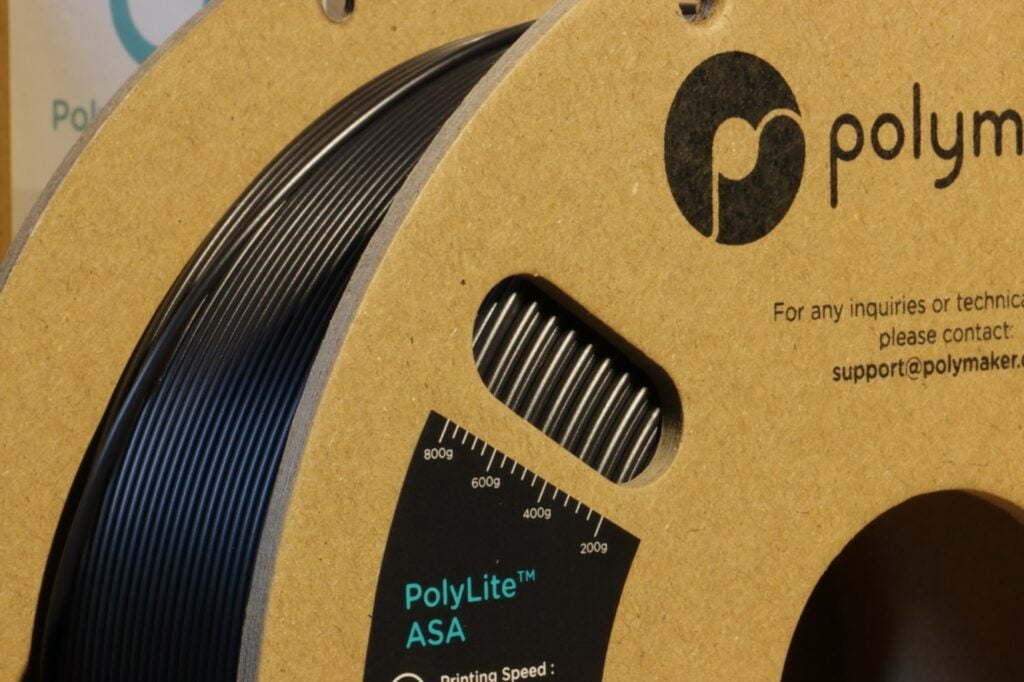
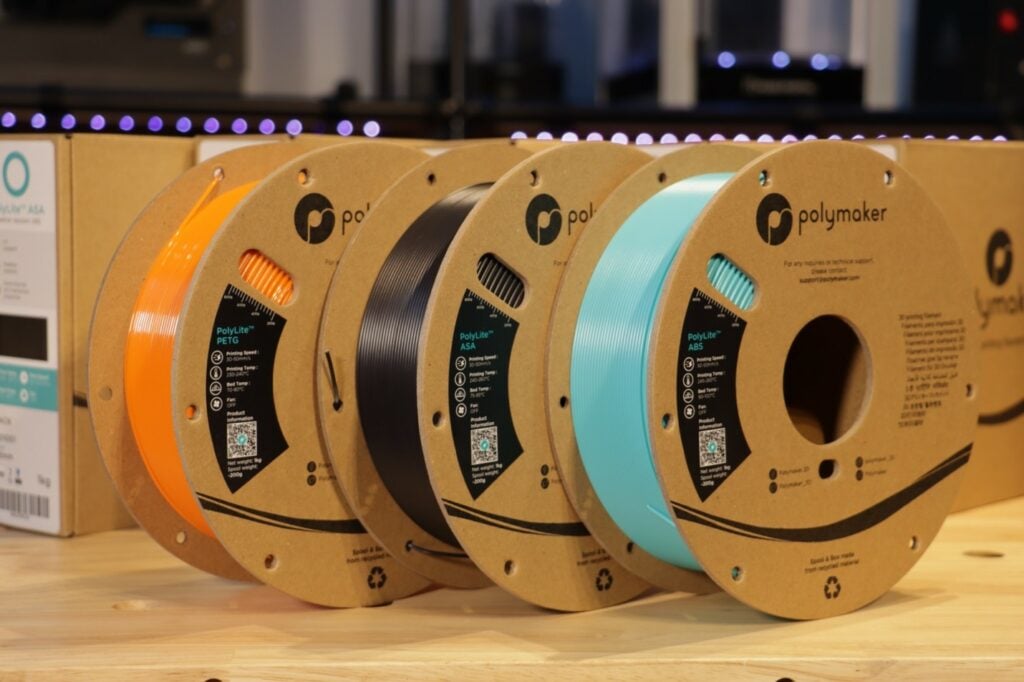
Voxel Percussion prints with Polymaker filament, including PolyMax Pro PLA and Panchroma Silk.

















Please fill in the form below or if you have other questions are not included in the form, please contact us through [email protected]. We will get back to you soon.
Please fill in the form below or if you have other questions are not included in the form, please contact us through [email protected]. We will get back to you soon.