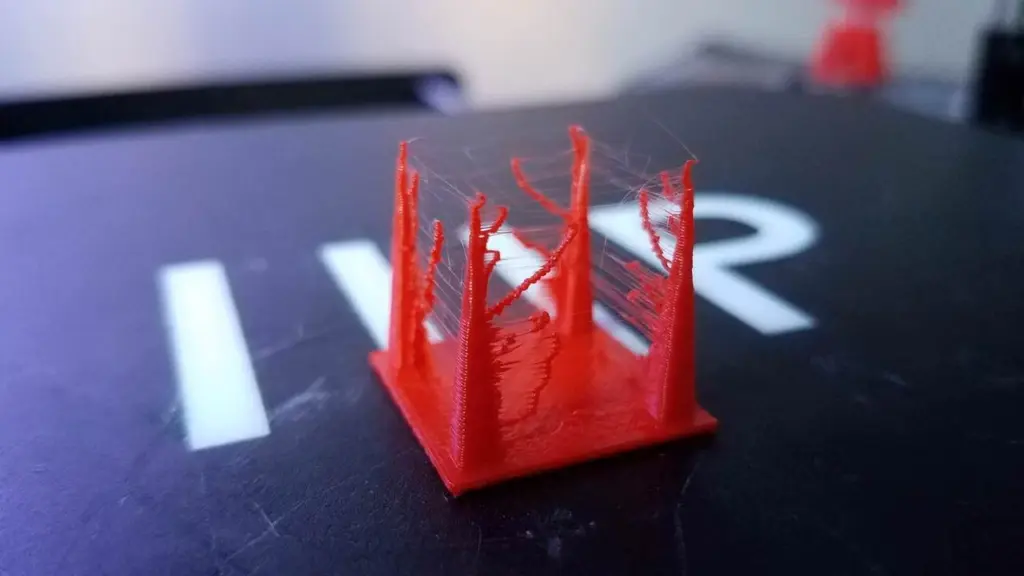
If you’ve ever pulled a spool off the shelf, started a long print, and watched it turn into a stringy, bubbling mess you already know the enemy: moisture. Wet filament is one of the most frustrating and overlooked causes of failed 3D prints, and yet most makers treat filament storage as an afterthought. Drying your filament a bit before printing can make a significant difference in print quality, as even a small amount of moisture can cause issues.
A filament dryer is a specialized device designed to remove absorbed water from 3D printing materials, particularly hygroscopic materials like Nylon, TPU, and PETG. Most users generally overlook the need for proper filament drying, which can lead to persistent print failures. Common signs that filament needs drying include popping or hissing noises during printing, visual defects like severe stringing or bubbles, and mechanical failures such as weak layer adhesion. The expected results of using a filament dryer are improved print quality and fewer failures. Filament dryers are essential for maintaining the quality of hygroscopic materials like Nylon and PETG, which can absorb moisture from the air, leading to poor print quality.
That’s exactly the problem Polymaker set out to solve with the PolyDryer ecosystem. And once you understand how it works, you might never dry filament any other way.
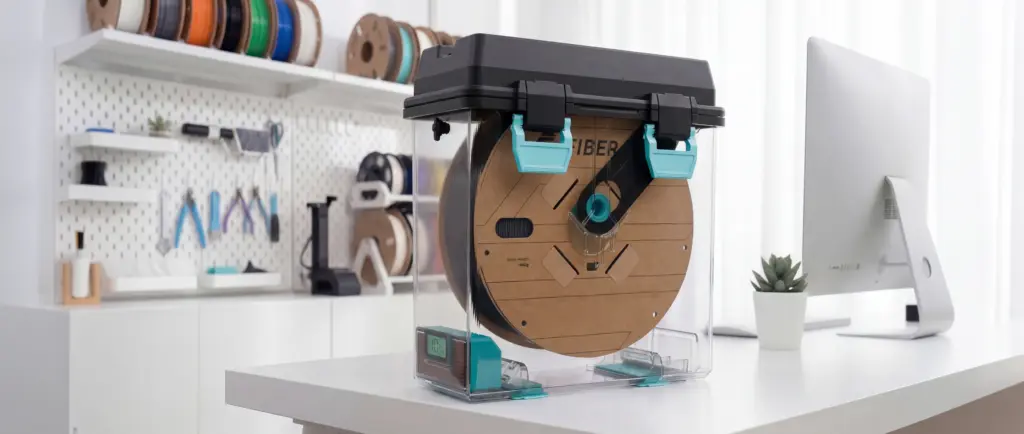
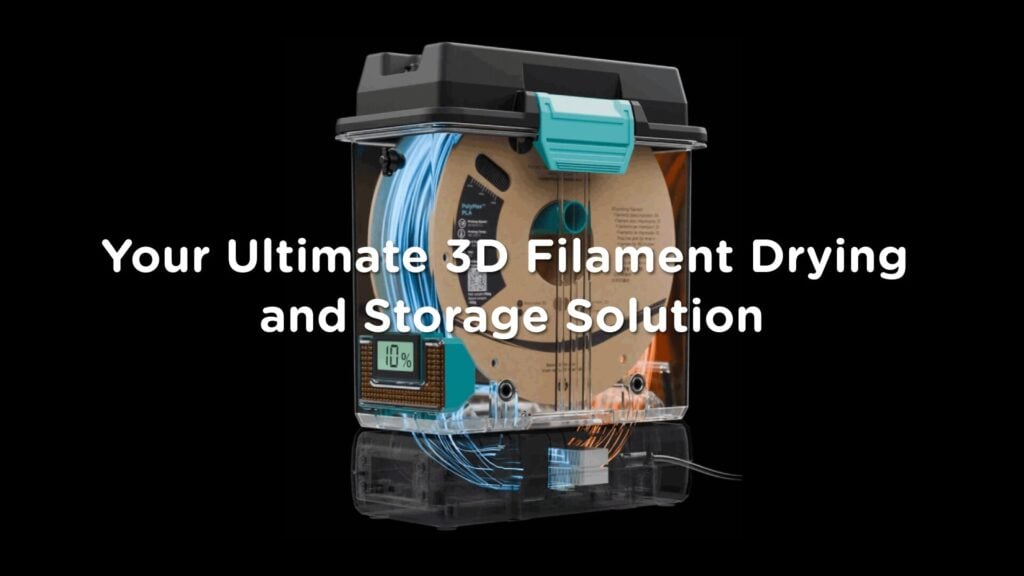
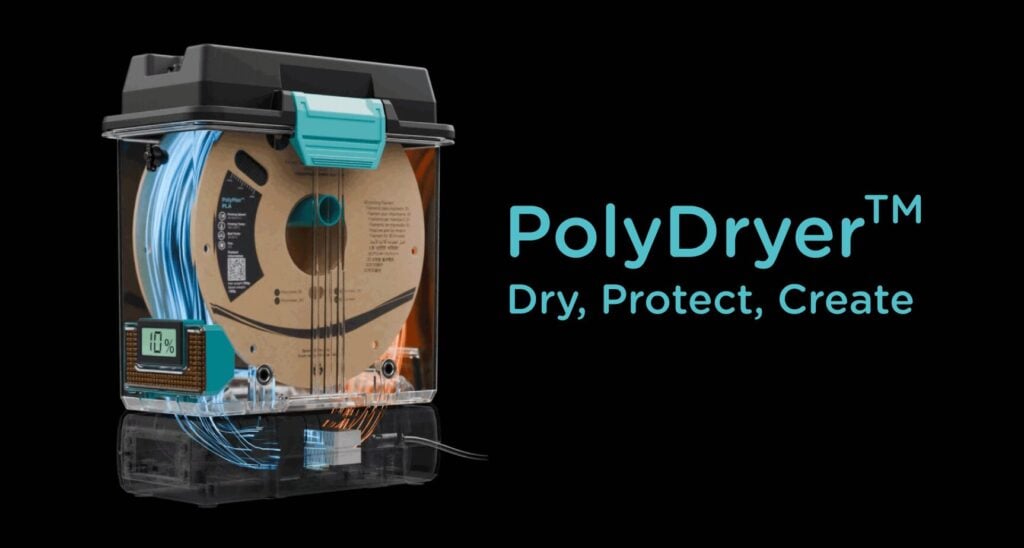
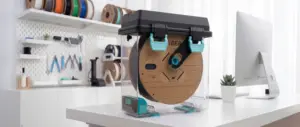
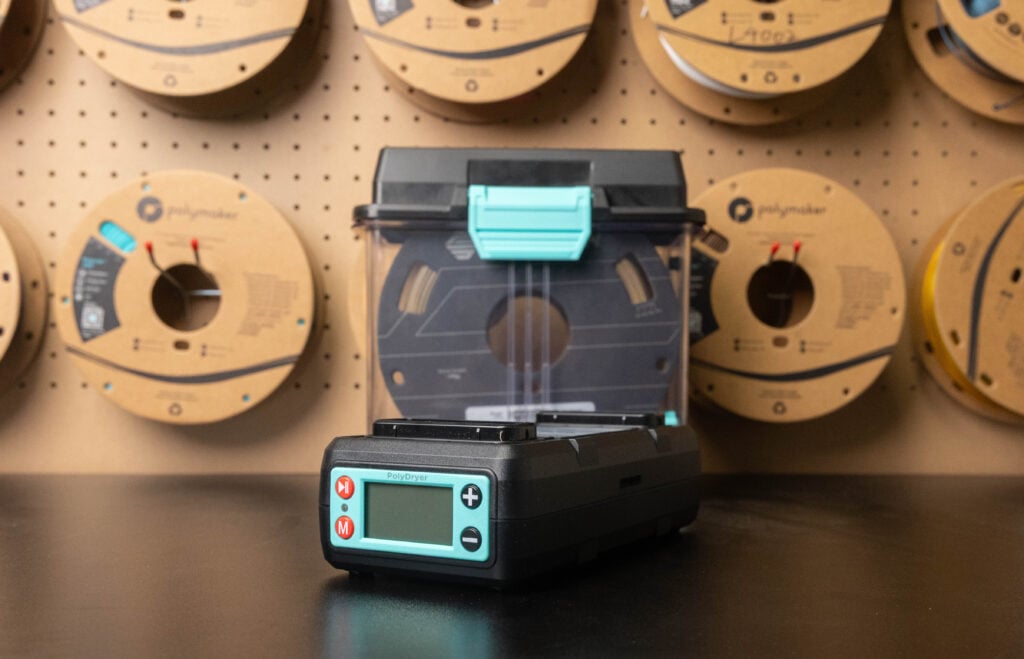
Polymaker’s PolyDryer™ modular drying and storage system is built around two core components: the PolyDry Dock (the active drying station) and the PolyDryBox (the airtight storage enclosure). Together, they form an ecosystem rather than a standalone gadget.
The PolyDry Dock sits at the heart of the system. Its heating element is covered for safety and even heat distribution, while a built-in fan improves airflow and drying efficiency. Modern filament dryers, including the PolyDryer, often feature built-in humidity sensors and timers, enabling real-time monitoring and control of the drying process. The PolyDryer also features a visual hygrometer that provides an at-a-glance status update on the condition of the filament being stored. It provides controlled, active heating that you can run in timed or continuous mode, meaning you can print directly from a drying spool without ever pausing. No more choosing between drying and printing.
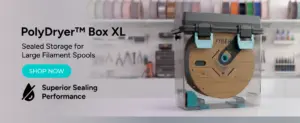
A truly effective filament drying process doesn’t stop at storage, it extends seamlessly into your 3D printing workflow. Integrating a dedicated PolyDryer™ drying solution with your 3D printing system ensures that your filament remains dry and ready to use, minimizing the risk of moisture-related print failures and maximizing the quality of your finished parts.
Seamless Workflow Integration: Many modern 3D printing setups now offer compatibility with external dryers or even include built-in drying units. For example, some Creality printers are designed to work alongside dedicated filament dryers, allowing you to feed filament directly from the drying unit into the printer. This integration helps maintain a reasonable amount of moisture control throughout the entire printing process, so your filament never has a chance to absorb humidity from the surrounding environment.
Wall Mounting and Organization: Space is always at a premium in a busy print room or workshop. That’s why some filament dryers and dry boxes come with wall mounting options, letting you keep your drying unit off the table and out of the way. Wall mounting not only saves valuable workspace but also helps create a more organized and efficient environment, with your filament always within reach and protected from accidental spills or dust.
Environmental Control and Monitoring: Proper integration is about maintaining the right conditions for your filament at all times. Many advanced drying units feature digital screens and switches that let you monitor and adjust temperature and humidity levels with precision. By keeping a close eye on these parameters, you can ensure that your filament stays dry, even during long print jobs or in challenging climates. Some units even allow you to set alerts or automate the drying process, so you never have to worry about forgetting to check on your spools.
Improved Print Quality and Reliability: By creating a controlled environment for your filament, integrated drying solutions help reduce the risk of wet filament causing stringing, poor adhesion, or other print defects. This is especially important for hygroscopic materials like nylon, which can absorb moisture quickly and degrade in quality if not properly protected, but can also benefit from controlled moisture conditioning of nylon parts after printing. With the right setup, you can maintain consistent filament quality from the first layer to the last, ensuring that every print meets your expectations.
The PolyBox™ dry storage container is where Polymaker really differentiates itself from cheap filament dryer alternatives. The box features a 360° silicone gasket combined with an airtight locking mechanism setting a sealing standard that's genuinely industry-leading. When the lid locks, the internal environment is isolated from ambient humidity, letting the integrated desiccant chamber do its job.
The desiccant system handles passive humidity control even when the dock isn't actively heating, so spools stored between print sessions remain protected.
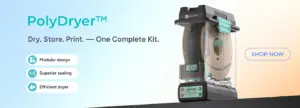
Running a print farm? Working with engineering-grade materials on large-format machines? Polymaker recently expanded the ecosystem with the PolyDryBox XL, part of its PolyDryer™ all-in-one filament drying and storage system, purpose-built for 3kg spools and designed to house multiple spools securely in a household environment, protecting your filament from humidity.
The XL is a thoughtfully redesigned storage solution with a higher count capacity compared to standard dryers:
When considering the count of spools a dryer can manage, the PolyDryBox XL stands out for large spools, while the SUNLU FilaDryer S4 is designed to accommodate and dry up to four 1kg spools simultaneously, making it ideal for users working with different 3D printing filament materials and multiple filament types. For those needing advanced features, the EIBOS Polyphemus incorporates a 360°C automatic rotating heating system and can house two 1kg spools or one 3kg spool, with automated humidity and temperature control.
It’s also compatible with the original PolyDry Dock, though you’ll need an adapter (available from Polymaker, or printable yourself) to seat the larger box on the dock correctly.
Here's something Polymaker is refreshingly transparent about: because the XL has 2.2× the internal volume of the standard box, active drying performance is limited. Temperature distribution inside the box is uneven, the bottom can reach 55°C at full power, while the top plateaus around 40°C. For a fully loaded 3kg spool, that means drying cycles of two to three days for materials like PETG. For rapid drying turnaround, oven drying is more efficient.
That means the PolyDryBox XL shines primarily as a dry storage solution, not a rapid dryer. The good news? All Polymaker spools ship factory-dried, so sealing a fresh spool directly into the XL gives you an ideal controlled environment right out of the box — literally.
A filament dryer is a dedicated, heated device that removes absorbed moisture from 3D printing filament before and during use. The heated element actively raises the temperature inside the dryer, evaporating moisture from hygroscopic materials like Nylon, TPU, and even PLA, which absorb water vapor from the air over time. In high humidity environments, such as coastal areas, filament can become unusable in just a few days, making drying essential for successful printing. When that moisture hits your hot end, it vaporizes and causes visible defects: stringing, popping noises, poor layer adhesion, and rough surface finish. Using a filament dryer can reverse the degradation of filament quality caused by moisture absorption, ensuring better layer adhesion and stronger, less brittle parts.
A quality filament dryer doesn’t just warm up your spool, it actively maintains low humidity in a sealed environment, so your filament stays print-ready whether you’re mid-job or storing it for next month. Many dryers allow you to continuously dry filament during printing, feeding the material directly from the dryer to the printer to keep it dry throughout the process. Most dryers feature a display or screen that shows real-time temperature and humidity, making it easy to monitor and adjust settings. You can switch the heating function on or off as needed for optimal drying. Some dryers are designed to handle a single roll, while others can accommodate multiple rolls, which is especially useful for print farms or users managing several filaments at once.
When setting temperatures, a lower temp (around 65-70°C) is fine for common filaments like PLA and PETG, but higher temperatures are needed for engineering-grade materials like Nylon and PC. Manufacturers may use different spool materials, such as cardboard or plastic, which can affect the maximum safe drying temperature, so always check manufacturer recommendations. For best results, drying your filament for at least an hour is recommended, especially if the filament has been unused for a while.
While many dryers on the market do not exceed 70°C, which may be insufficient for Nylon, the Sunlu E2 filament dryer can reach up to 110°C and even features an annealing mode for post-processing, making it suitable for demanding, engineering-grade materials.
The Polymaker PolyDryer ecosystem is a modular, sealed, actively maintained environment designed around how real 3D printers actually work, continuously, with demanding materials, at scale.
Whether you start with the standard PolyDryBox and Dock or go straight to the XL for large spools, you're investing in a system that grows with your printing setup. And once your prints stop popping and stringing, you'll wonder how you ever printed without one.

















Please fill in the form below or if you have other questions are not included in the form, please contact us through [email protected]. We will get back to you soon.
Please fill in the form below or if you have other questions are not included in the form, please contact us through [email protected]. We will get back to you soon.