When we launched HT-PLA last year, we solved a real problem: PLA that could actually handle heat. HT-PLA Pro is the next step—an advanced heat-stable PLA filament built to deliver both toughness and heat resistance, with nearly 10x the fatigue impact resistance of regular HT-PLA and far better durability than standard PLA under heated, humid conditions.
But we'd traded one limitation for another. It was tough or heat-stable. Engineers, professional designers, manufacturers, and even demanding hobbyists kept asking for both because functional parts have to survive impact, layer stress, and elevated temperatures without the handling complexity of more difficult engineering plastics.
So we built a test to understand what "tough at temperature" actually means, and then we built a material to win it. In the sections that follow, we break down the development of HT-PLA Pro, the custom thermosiphon impact rig used to measure performance, how it compares with other PLA and engineering materials, and what its impact strength, layer adhesion, printability, and real-world use mean for parts that need to keep working in harsh environments.
High-temperature PLA has a PR problem. The datasheet says one thing; real parts tell a different story.
Charpy impact tests are controlled, destructive events—a notched sample, a single strike, a measurement of how much energy it absorbs before fracture. They're useful. But they don't tell you what happens when your part lives in a harsh environment. They don't tell you about fatigue, or the way different mechanical properties (impact resistance, elongation, tensile strength, layer adhesion) work together over time.
If I ask myself what I actually want from a filament, it's not the ability to survive one catastrophic impact. It's the ability to survive the fatigue of daily life.
So we designed a test that measures that.
The core is simple in concept: repetitive impacts in a hot, humid environment. The execution is more involved.
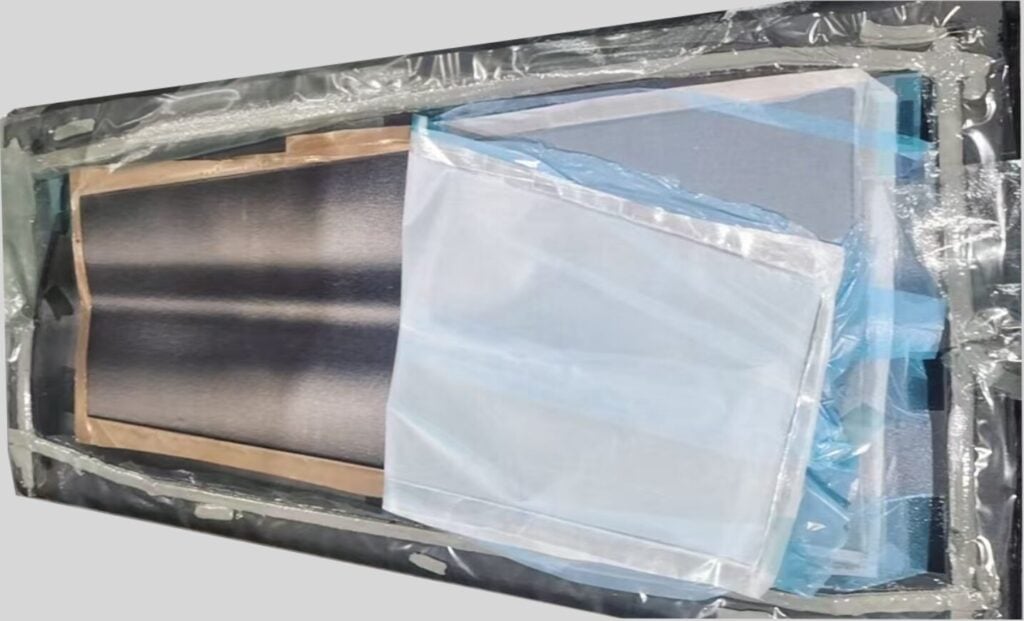
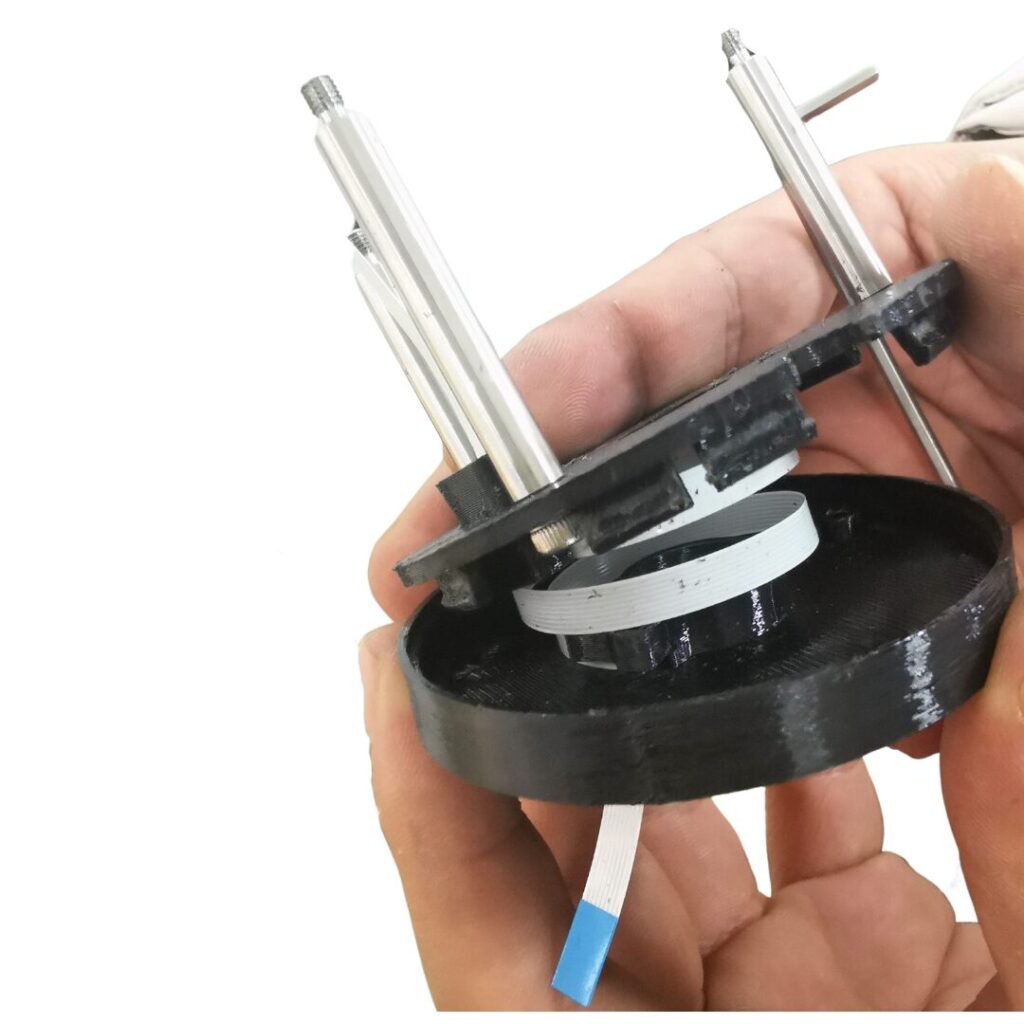
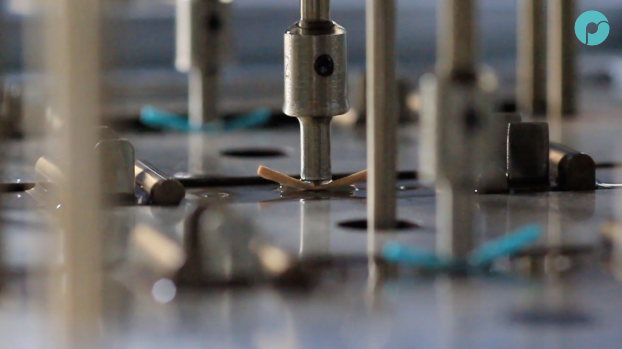
We built a custom test rig around a thermosiphon—a closed-loop copper pipe system heated by an induction plate. Inside, a 3D-printed carriage runs on eight precision bearings. A 24V motor winds tension into a spring, then releases it, shooting the carriage into an impact stop thousands of times. Every cycle is recorded with a mechanical click counter and timelapse photography.
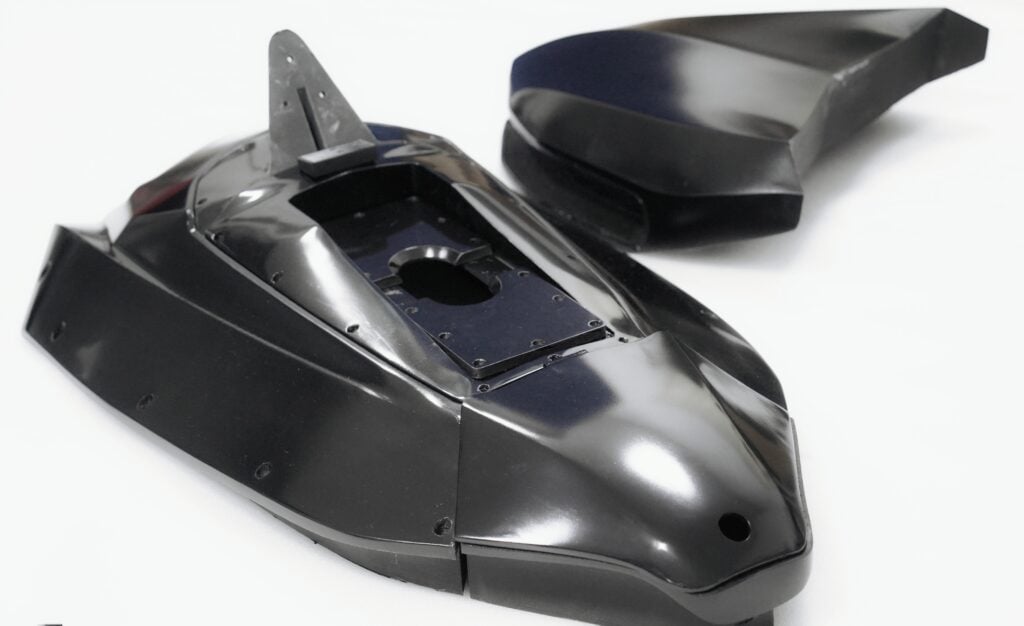
The carriage itself is the test sample. It's printed in three parts—front, back, and impactor—designed to fail in specific ways. The impactor absorbs the strike and presents a smooth, curved surface to the impact stop. When materials fail, they fail here, at the point of real stress concentration.
Why build this? Because it forces the material to do what real parts do: absorb repeated impacts while heat travels through the system, softening and stress-testing every layer and junction.

First, the baseline. Room temperature, no heat stress, just pure fatigue resistance.
PLA Pro: 1,709 impacts before failure HT-PLA Pro: 3,157 impacts
That's nearly 2x tougher. But here's the interesting part: HT-PLA Pro is also tougher than regular HT-PLA by a factor of 4. And it's almost 2x tougher than PLA Pro in this specific test—even though Charpy data suggests the opposite.
Why? Because this test isn't measuring single-impact strength. It's measuring the combination of impact resistance, layer adhesion, and elongation at break working in concert. Stress whitening appears on both Pro materials but not on regular PLA. The failure mode is similar across all three, but the Pro materials simply absorb more cumulative abuse.
This is where the test gets real.
We heated the thermosiphon to 85°C (roughly the temperature your part would experience in an enclosure, an engine bay, or direct sunlight in a humid climate). By comparison, standard PLA filaments in the Polymaker portfolio have a heat deflection temperature of 50°C. The copper pipes radiate heat into the carriage continuously. Every bearing, every layer junction, every bond between walls becomes softer, more compliant, more vulnerable to creep.
The results ranked the materials decisively:
That's a 9.7x improvement over regular HT-PLA. More importantly, it's a 3.7x improvement over PLA Pro—a material optimized for toughness at room temperature.
The failure mode varied. PLA Pro's carriage seized completely; the heat transferred through the bearings faster than the impactor could absorb impacts. For HT-PLA Pro, the impactor eventually fractured, but it took hours to get there. The difference is that HT-PLA Pro kept working. The material didn't give up under sustained thermal stress.
We printed carriages in PETG, PC, ABS, and Nylon 12 to see where HT-PLA Pro actually sits in the competitive landscape regarding heat resistance and mechanical performance, compared with more advanced options like carbon fiber reinforced Nylon 12 filaments.
ABS: 161 impacts — didn't even match PLA. ABS has a heat deflection temperature of about 90°C at 0.45 MPa, offering moderate temperature resistance but is prone to brittle failure under repeated impacts in heated conditions. Its thermal stability is limited compared to HT-PLA Pro, making it less suitable for parts needing to withstand high temperatures consistently.
PETG: 261 impacts — stronger than ABS, but broke suddenly and catastrophically. PETG provides better temperature resistance than standard PLA, with improved heat resistant properties and surface finish, but its temperature resistance and thermal stability still fall short of HT-PLA Pro. It is easily printed on most FDM printers but lacks the advanced materials' ability to withstand high temperatures and repeated thermal stress.
PC (Polycarbonate): 426 impacts—respectable, but still half the performance of HT-PLA Pro. PC offers excellent temperature resistance and thermal stability, with a nozzle temperature typically above 260°C and bed temps around 110°C, making it suitable for industrial environments. However, in this test, the heat environment caused material deformation and failure, showing that even with high temperature resistance, PC may not always withstand high temperatures combined with impact fatigue as effectively as HT-PLA Pro.
Nylon 12: 6,000+ impacts (lost bearings at impact 25, but continued running). Exceptionally flexible and with high temperature resistance, Nylon 12 can withstand continuous heat exposure and mechanical stress better than most filaments. However, Nylon requires a heated bed and higher nozzle temperatures (around 250°C), plus careful moisture control due to its hygroscopic nature. Its printing challenges include wavy walls, ballooning, and accuracy issues, making it less suitable for functional prototypes where surface finish and dimensional consistency are critical.
And here's the honest bit: Nylon's extreme fatigue resistance came with a catch. Once bearings fell out, less heat transferred into the carriage, potentially skewing the test results. While Nylon is technically tougher and offers superior temperature resistance, it is less practical for parts requiring consistent shape and surface finish.
Compared to these materials, HT-PLA Pro stands out as an excellent choice for applications that demand a balance of heat resistant properties, thermal stability, and ease of printing, especially if you're already familiar with our original HT-PLA and HT-PLA-GF high-temperature PLA filaments. It withstands high temperatures up to 150°C with excellent heat deflection and maintains shape without deformation or warping on most FDM printers using standard nozzle temperatures around 230°C and bed temps between 25–65°C. This makes it a reliable, heat resistant filament suitable for functional prototypes and printed parts exposed to industrial environments.
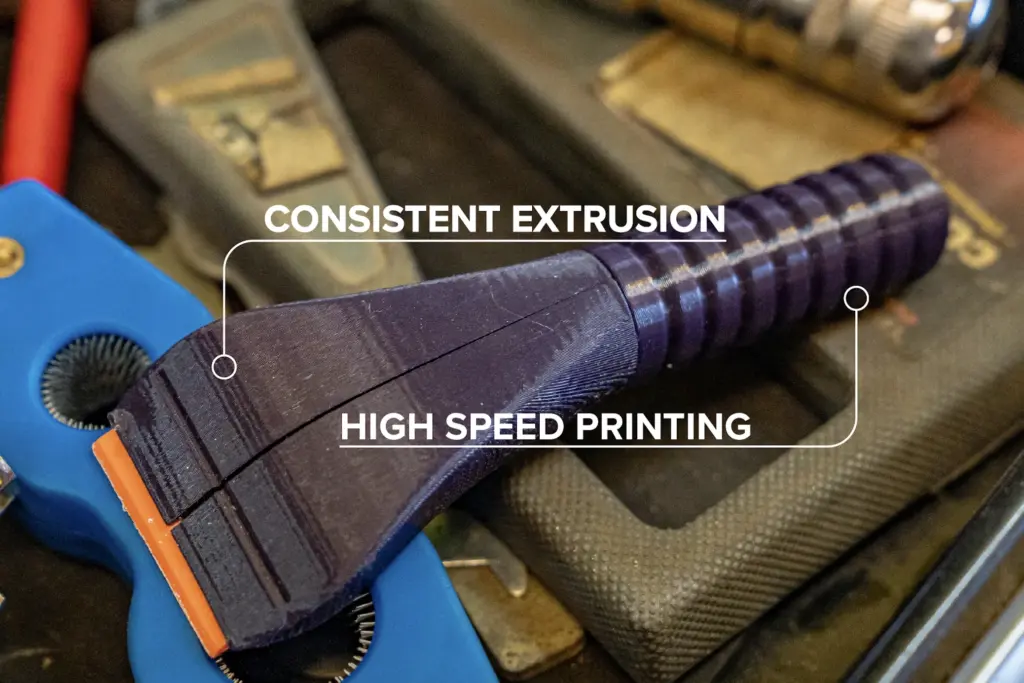
HT-PLA Pro combines the advantages of advanced materials with the eco-friendly nature of PLA, providing great filament that prints beautifully with consistent extrusion and excellent layer adhesion. Its ability to maintain mechanical integrity under thermal stress and impact fatigue makes it a critical material for parts that must withstand high temperatures and mechanical loads without compromising surface finish or shape.
In summary, HT-PLA Pro offers a unique combination of toughness, temperature resistance, and printability that bridges the gap between standard PLA and more demanding engineering-grade materials, making it an excellent choice for designers and engineers seeking reliable, heat resistant prints without the complexity of specialized printers or post-processing, while the broader HT-PLA product family continues to serve a wide range of high-temperature applications.
HT-PLA Pro isn't going to replace nylon or polycarbonate in load-bearing automotive applications. It's not marketed as engineering-grade in that sense.
What it is: the most well-rounded PLA we've ever produced.
It maintains the heat stability you expect from HT-PLA—a Vicat softening temperature of 150.5°C after annealing, heat deflection of 107.6°C at 0.45 MPa. It adds a 30% increase in layer adhesion (Z-tensile strength from 20.8 to 26.8 MPa) and more than double the notched Charpy impact strength (9.94 vs. 4.94 kJ/m²).
It prints like PLA. Standard FDM, no enclosure, 230°C nozzle, 25–65°C bed. Up to 300 mm/s. No special handling. No moisture sensitivity. No drying requirements.
It survives in hot, humid environments where regular PLA fails catastrophically—and does it more consistently than materials that require hardened nozzles, enclosures, or careful post-processing.
For engineers designing functional parts, that combination matters. The parts you're building need to survive assembly, the journey to the customer, and the actual use environment. HT-PLA Pro does that without forcing you to compromise on print reliability or cost.
The custom rig told us something the datasheets couldn't: that engineering-grade performance isn't always about peak numbers. It's about what you can count on.
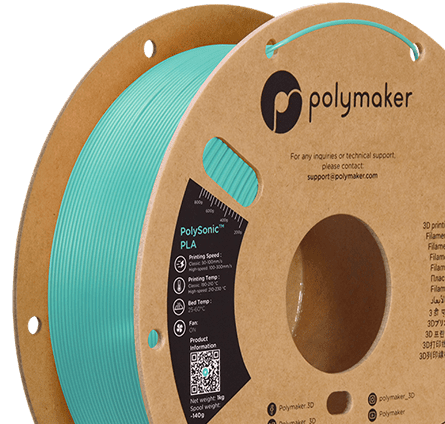
HT-PLA Pro is available now in 18 colors at €25.99 / $25.99 per kilogram.
If you're designing parts that need to live in heat and take impacts, it's worth a trial spool.
While HT-PLA Pro maintains the heat stability engineers expect from the HT-PLA family (Vicat softening at 150.5°C (annealed) and heat deflection of 107.6°C at 0.45 MPa), the real evolution is in durability.
HT-PLA Pro's notched Charpy impact strength nearly doubles, jumping to 9.94 kJ/m² from 4.94 kJ/m², a performance gain driven by a 30% improvement in layer adhesion (Z-tensile strength increases from 20.8 to 26.8 MPa).
This matters in real parts: the higher Z-tensile means interlayer bonds are stronger, and combined with improved elongation at break, HT-PLA Pro absorbs repeated mechanical stress more gracefully than regular HT-PLA.
Both print identically—230°C nozzle, PLA-style settings, no enclosure required—but HT-PLA Pro trades a small reduction in tensile stiffness (37.6 MPa vs. 42.86 MPa in the X-Y plane) for dramatically improved fatigue resistance.
For parts that need to survive impacts and flexing in warm environments, HT-PLA Pro is the upgrade; for applications where rigid strength and heat stability are the primary concerns, standard HT-PLA with its detailed printer profiles remains a solid choice.
Want the full technical breakdown? Check out our HT-PLA Pro datasheet for Charpy impact, heat deflection, tensile, and layer adhesion specs.
















Please fill in the form below or if you have other questions are not included in the form, please contact us through [email protected]. We will get back to you soon.
Please fill in the form below or if you have other questions are not included in the form, please contact us through [email protected]. We will get back to you soon.