


Three personalities, one week in Milan
-
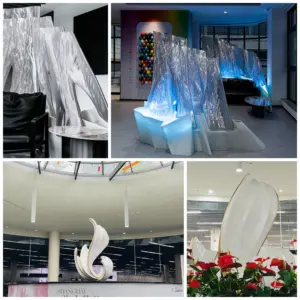
Royals collection by IAMMI Studio - delicate, jewelry-like lampshades printed in PolyCore™ PETG-1000. The translucent finish makes light the narrator; if your project lives or dies by clarity and controlled diffusion, 1000 is the grade that delivers.
-
Lithic Flow Divider by Caracol AM, a parametric architectural wall with an authentic marble finish, straight out of the extruder. The secret is PolyCore™ PETG-1113 Marble, which gives you genuine stone aesthetics without compromising the structural performance and printability of glass-filled PETG. No post-finish tricks — the marble is in the material itself.
-
Ginger Pavilion nodes by Sina Lüder, reusable, material-efficient connectors printed in PolyCore™ PETG-1312. These nodes form a fully functional structure, proving that medium-format LFAM can deliver the detail, strength, and dimensional stability that real construction demands.
Architectural-scale statements, Suzhou and Shanghai
-
Sérac 凌川 indoor partition by Dr. Dasong Wang - now standing permanently in our Suzhou R&D center- is a masterclass in material pairing. The load-bearing base uses PolyCore™ PETG-1113 (30% glass fiber) for rigid folded strength, while the upper translucent volume exploits the high transmittance of PolyCore™ PETG-1000 to turn glacier-like topology into light-filled space. Two materials, one seamless experience.
-
Origin of Huangpu magnolia sculpture by Flash - blooming inside Shanghai’s busiest metro station, this public artwork was fabricated with PolyCore™ PETG-1312. For medium-format projects where complexity, scale, and deadline collide, PETG-1312 is formulated to remove the usual trade-offs: clean retraction, dramatically reduced warping, and a surface finish that cuts post-processing down to size.
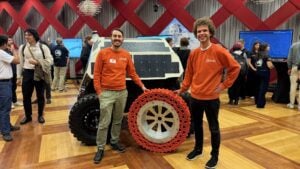
And then there’s the rover tire bound for Antarctica
Every great racing machine starts long before it hits the track, it begins as an idea, shaped by engineering precision, creativity, and relentless iteration. At the UPM MotoStudent Petrol team, that journey is accelerated through the power of 3D printing and high-performance materials from Polymaker. Carbon fiber filament is a plastic filament mixed with small chopped carbon fibers, which enhance stiffness, improve dimensional accuracy, and reduce warping during printing.
Who Are UPM MotoStudent Petrol?
Representing the Universidad Politécnica de Madrid, the UPM MotoStudent Petrol team is a multidisciplinary group of students competing in the prestigious MotoStudent competition. Every two years, the team designs and builds a brand-new motorcycle prototype from scratch, then continuously refines it for competitive racing, including participation in the Portuguese National Championship.
With dedicated departments spanning:
• Mechanics
• Aerodynamics
• Powertrain
• Electronics
• Marketing
…the team operates like a professional racing organization, where innovation and efficiency are critical.
For a student racing team working under tight timelines and budgets, agility is everything. That’s where 3D printing becomes a game-changer.
By integrating additive manufacturing into their workflow, the team can:
• Rapidly iterate on designs
• Reduce manufacturing costs
• Produce complex geometries that would otherwise be impossible
Key Applications
Their use of 3D printing spans across multiple functions:
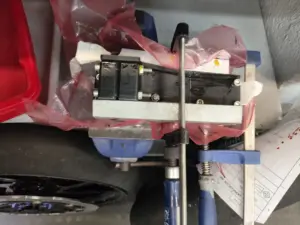
• Carbon fiber mold production
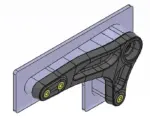
• Structural supports and brackets
• Functional mechanical components
• Team merchandise and prototypes
This flexibility allows them to move seamlessly from concept to physical part, often within hours. Small batch production is especially valuable for producing strong, durable, and custom parts quickly and cost-effectively, ideal for prototyping, low-volume manufacturing, and specialized components. When assembling molds from multiple printed sections, selecting the appropriate adhesive is essential—especially for PETG—to ensure a secure and durable assembly. The use of glass fiber in reinforced thermoplastics and filaments further enhances stiffness, thermal stability, weather resistance, and overall durability for demanding applications. Printing at higher resolution can achieve a smoother surface on the mold, facilitating easier release and better surface quality. It’s also important to consider the intended application of the printed part when selecting filament, focusing on properties like stiffness, heat resistance, and durability.
Proven Applications
The team has already leveraged 3D printing for a variety of critical components, including:
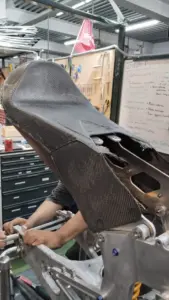
• Tail section molds
• Gas tank cover molds
• Spark plug coil holders
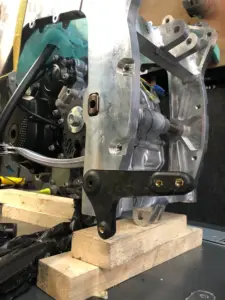
• Shifter linkage molds for carbon fiber compression
These applications demonstrate how additive manufacturing is not just a prototyping tool but a core production method in high-performance motorsport environments.
Choosing the Right Material: Why Polymaker?
Material selection is crucial when performance, durability, and precision are non-negotiable. The team strategically uses a range of Polymaker materials to match each application.
Polymaker™ PETG
Their go-to material for mold-making:
• Excellent flexibility for easy release
• Fast and reliable printing
• Versatile across multiple use cases
PETG carbon fiber filament offers a balance of strength and rigidity, making it suitable for brackets, enclosures, and daily use parts, while high-performance CF filaments are designed for industrial and high-heat applications. PETG is known for its excellent layer adhesion, which contributes to its strength and durability in 3D printed parts. PETG also has good impact resistance and is less brittle than other materials like PLA, making it suitable for functional parts that require some flexibility. When used for molds, PETG offers reliable release properties, which can be enhanced by applying a release agent for easier demolding.
Fiberon™ PA6-CF20 & GF25
Designed for high-performance mechanical parts:
• Outstanding strength-to-weight ratio
• Reinforced with carbon and glass fibers
• Ideal for load-bearing components like brackets and supports
Nylon carbon fiber filament is known for its high strength and durability, making it ideal for tools and mechanical parts.
Panchroma™ Matte PLA
Perfect for prototyping and visual models:
• High-quality surface finish
• Ideal for non-mechanical parts
• Used for scale models and aerodynamic testing
PLA filament is very easy to print and is suitable for visual parts and light functional prints.
By combining these materials, the team achieves the perfect balance between performance, cost-efficiency, and manufacturability.
There are different types of carbon fiber filaments, including PLA, PETG, Nylon, and high-performance CF filaments. Each type varies in ease of printing, strength, rigidity, and heat resistance. PLA carbon fiber is easy to print and great for light functional parts, PETG carbon fiber balances strength and rigidity for everyday use, Nylon carbon fiber offers high strength and durability for tools and mechanical parts, and high-performance CF filaments are designed for industrial and high-heat applications.
Looking Ahead: Pushing Boundaries Even Further
The next phase of the project showcases just how far additive manufacturing can go.
Wind Tunnel Testing with a Full-Scale Replica
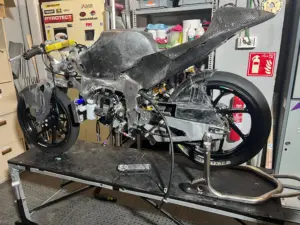
The team is developing a 2:3 scale 3D printed replica of their motorcycle to validate CFD simulations in a wind tunnel, bringing digital design and real-world testing closer than ever.
Fully Custom Fairing Development
One of their most ambitious projects involves designing and producing a completely custom fairing:
• Digital design translated into physical molds
• Carbon fiber fabrication enabled by 3D printed tooling
• Full control over aerodynamics and performance
3D printing enables the creation of complex internal structures, such as honeycomb or lattice patterns, which maintain structural integrity while significantly reducing mass. Engineers can also produce 'impossible' geometries, including obstructed overhangs, hollow cavities, and integrated fluid channels, which are difficult or too expensive to achieve via traditional manufacturing.
Driving the Future of Motorsport Innovation
The UPM MotoStudent Petrol team exemplifies how the next generation of engineers is redefining manufacturing. By combining cutting-edge design with Polymaker’s advanced materials, they are not only building a race bike they are building the future of motorsport engineering.
From rapid prototyping to functional end-use parts, 3D printing is no longer optional, it’s essential.
And with the right materials, the possibilities are limitless.
The Journey from Concept to Track: Team Vision and Project Goals
Transforming an initial concept into a race-ready motorcycle is a journey marked by careful planning, iterative design, and rigorous testing. Teams in the UPM MotoStudent competition set ambitious goals: to create motorcycles that excel in performance, safety, and innovation. Leveraging 3D printing with carbon fiber filament, teams can rapidly prototype and refine complex shapes that would be difficult or impossible to manufacture using traditional methods. This approach allows for the integration of intricate fiber structures and optimized geometries, enabling engineers to experiment with new ideas and quickly adapt to design challenges. By embracing additive manufacturing, teams not only accelerate their development cycles but also maximize material efficiency, ensuring that every carbon fiber component contributes to the overall vision of a high-performance, competitive motorcycle.
Benefits of Carbon Fiber in Motorsport Innovation
Carbon fiber stands at the forefront of motorsport innovation, offering a unique blend of high stiffness, strength, and fatigue resistance. These properties make it the material of choice for components subjected to intense stress and vibration, such as frames, swingarms, and aerodynamic fairings. The lightweight nature of carbon fiber enhances the power-to-weight ratio, resulting in improved acceleration, handling, and overall performance on the track. Additionally, the versatility of fiber materials allows engineers to design complex geometries—like monocoque frames and sculpted fairings—that optimize aerodynamics and reduce drag. By harnessing the full potential of carbon fiber, teams can push the limits of motorcycle design, achieving breakthroughs in speed, agility, and durability that set new standards in motorsport engineering.
3D Printing with Carbon Fiber Filament: Unlocking New Possibilities
The advent of 3D printing with carbon fiber filament has revolutionized the production of high-performance motorcycle parts. This additive manufacturing process involves extruding a blend of carbon fibers and thermoplastic polymer through a heated nozzle, building parts layer by layer with remarkable precision. The resulting carbon fiber parts exhibit outstanding mechanical properties, including superior strength, stiffness, and dimensional accuracy. To achieve optimal results, careful attention must be paid to print settings such as layer height and infill density, which help minimize visible layer lines and ensure a smooth surface finish. This technology is particularly advantageous for small batch and low volume production, enabling teams to quickly produce custom components tailored to specific design requirements. By utilizing carbon fiber filament, engineers can create intricate, lightweight structures that meet the demanding standards of motorsport applications.
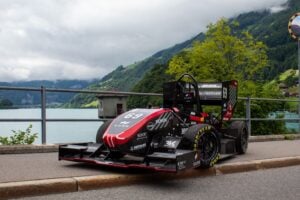
CURE Mannheim e.V. is the Formula Student team of DHBW Mannheim, where a new fully electric race car is designed, manufactured, and competed all across Europe every season. The team combines expertise from various engineering disciplines, including aerodynamics, electric powertrains, high-voltage systems, lightweight construction, and vehicle dynamics.
Their mission is to drive innovation in electric motorsport through high-quality engineering, sustainable design decisions, and the use of modern manufacturing technologies. They aim to create reliable, high-performance components while maintaining efficient workflows and industry-oriented development methods.
Why CURE Mannheim uses 3D printed parts
Additive manufacturing has become one of the most important tools in our development cycle. The ability to produce parts quickly, cost-effectively, and with complex geometries makes 3D printing ideal for the high pace and engineering depth of Formula Student.
For CURE, 3D printing provides:
- rapid production of prototypes and functional components
- full freedom of geometry, enabling optimized designs
- significant reduction of lead times in the development process
- customized parts that fit the specific technical requirements
- cost efficiency, especially for low-volume or experimental parts
From the first design idea to the final race-ready component, 3D printing allows them to iterate faster and innovate more efficiently.
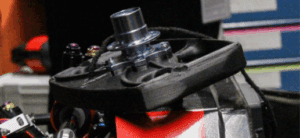
Steering Wheel made out of Polymaker Fiberon™ PA6-CF20
Advantages of 3D Printed Parts
3D printing offers several benefits for their vehicle development. It allows the production of lightweight components, supports the creation of complex geometries such as ducts, housings, and aerodynamic structures, and enables fast iteration during the design process. The technology is cost-efficient for low-volume manufacturing and provides a wide range of materials, making it possible to select the most suitable filament for each application.
Why these Specific Polymaker Materials
To meet the broad range of mechanical, thermal, and functional requirements in the vehicle, Cure Mannheim selected four Polymaker materials that fit perfectly into their application spectrum.
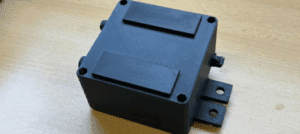
PolyMax PC-FR is used for components that require thermal stability and electrical safety, such as TS housings and PCB enclosures. Its flame-retardant formulation, strong layer adhesion, and high heat resistance make it ideal for protecting sensitive electronics and ensuring reliability in areas exposed to elevated temperatures.
PolyMax PETG is Cure Mannheim's preferred choice for quick and dependable prototype production. It prints consistently, offers sufficient mechanical strength for non-critical parts and withstands moderate chemical exposure. These properties make it suitable for functional prototypes and components like "catch can covers" that do not require high structural performance.
Fiberon™ PA6-CF20 provides the combination of stiffness, strength, and low weight needed for structural applications in the vehicle. The carbon-fiber reinforcement improves dimensional stability and increases the material’s load-bearing capability, making it well-suited for steering gear mounts, inserts, and aerodynamic core structures.
PolyFlex TPU is used when flexibility, durability, and environmental protection are required. Its elasticity and abrasion resistance allows to create custom sealing elements and protective features, particularly around high-voltage components, where resistance to dirt, moisture, and vibration is essential.
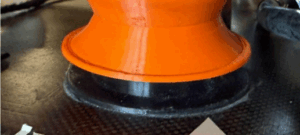
Sealing made out of TPU-90A
What they aim to achieve with the Project
Our objective is to demonstrate how advanced 3D printing materials can meaningfully contribute to the performance, reliability, and safety of a modern Formula Student race car. Through the integration of Polymaker materials, CURE Mannheim aims to:
- enhance the mechanical and thermal performance of our components
- reduce weight while maintaining structural integrity
- improve safety in areas involving electronics and high-voltage systems
- accelerate development cycles with fast prototype-to-final-part transitions
- explore new possibilities in lightweight design and component optimization
By achieving these goals, the teams strengthen their position as an innovative Formula Student team and highlight the benefits of combining engineering expertise with advanced additive manufacturing materials.
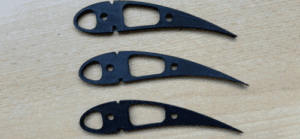
Example Components of 3D printed parts
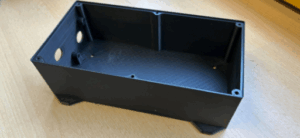
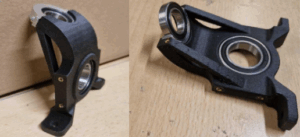
Polymaker's FGF/LFAM Business Development Manager, Deborah Claxton, recently visited Krauss Maffei, our partner, to learn about the powerPrint System and how it utilizes pellet materials. With almost 190 years of experience, Krauss Maffei is a leading manufacturer of machinery and systems for the production and processing of plastics and rubber. The company has consistently been at the forefront of innovation, specializing in technologies such as injection molding, extrusion, and reaction processing. Now, Krauss Maffei is elevating its offerings by integrating new additive manufacturing solutions.
The powerPrint System: Revolutionizing Large-Scale 3D Printing
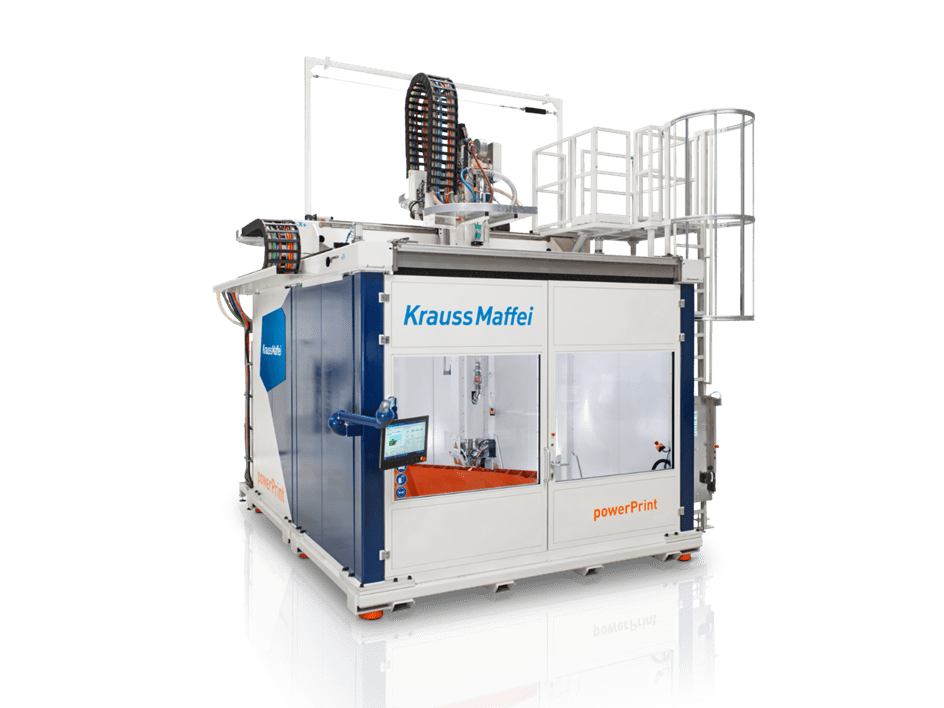
The powerPrint system represents KraussMaffei’s significant leap into the additive manufacturing arena. This gantry-based, large-scale 3D printer is meticulously designed to deliver high-quality, repeatable production, addressing longstanding challenges in the industry such as warping and adhesion failures.
Key Features:
- Advanced Extrusion Technology: The heart of the powerPrint system lies in its specially designed extrusion unit. Featuring a longer screw length for homogeneous melting, the unit ensures precise control over material flow and temperature, resulting in consistent, high-quality prints.
- Thermal Management: Equipped with a thermally isolated housing and heated print table, the system minimizes the risks of warping and adhesion issues.
- Process Stability: With advanced temperature control and optimized material flow, the system guarantees consistent results across multiple production runs, even in demanding industrial applications.
An Example Case Study with Pellet Material from Polymaker
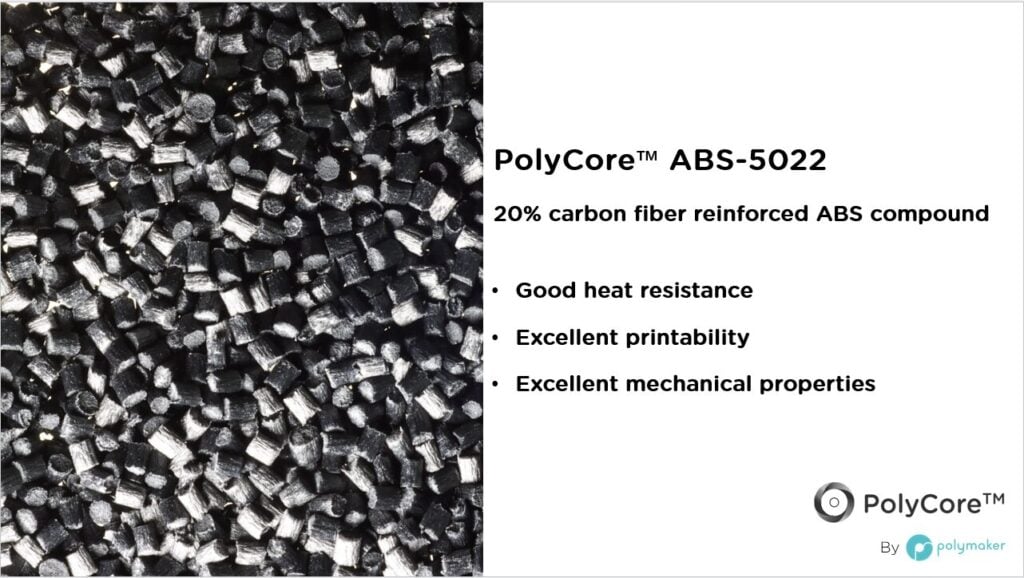
To demonstrate the optimal performance of this system, Krauss Maffei collaborated with Polymaker to produce a thin-walled part used in the automotive and white goods industry. This part was printed with PolyCore™ ABS-5022 (20% carbon fiber reinforced ABS compound pellet). This carbon fiber reinforced material offers increased stiffness, strength and resistance to deformation under pressure. This partnership highlighted the system's ability to achieve rapid production with reduced costs while maintaining high mechanical integrity. By enabling simultaneous printing of multiple parts, followed by precision finishing, Krauss Maffei showcases its ability to streamline workflows and reduce lead times significantly. The use of PolyCore™ ABS-5022 allows for reduced layer times and cost-effective production while maintaining the mechanical properties comparable to traditional manufacturing methods.

Case Study Details:
Weight: 0,543 Kg
Dimensions: 520 x 310 x 4,5 mm
Printing System: Krauss Maffei powerPrint
Printing by: KraussMaffei Technologies GmbH
Printed with: PolyCore™ ABS-5022
"Using Polycore™ ABS-5022 allowed us to achieve high-quality, large-scale parts with reduced layer times and cost-effective production. Its material properties closely match those of traditional manufacturing methods like injection molding, making it ideal for automotive and white goods applications. This case study demonstrates how additive manufacturing can transition from prototyping to pre-series production with confidence." – Michael Helneder, Head of Customer Success Krauss Maffei
Looking Ahead: Future Innovations
Krauss Maffei’s vision for additive manufacturing extends to the introduction of an industrial robot-based system. Set to debut at the JEC show in Paris in 2025, this system will enable multi-dimensional printing, unlocking new possibilities for complex geometries and non-planar designs. By integrating data tracking and advanced polymers into its solutions, Krauss Maffei continues to set new benchmarks for quality and efficiency.
The company’s ongoing partnership with Polymaker at events like TCT Asia 2025 further emphasizes its focus on addressing industry challenges through innovation and collaboration.
Conclusion
Krauss Maffei’s foray into additive manufacturing with the powerPrint system demonstrates its dedication to innovation and industry leadership. By combining cutting-edge technology, customer-focused services, and strategic partnerships, the company is well-positioned to shape the future of large-scale additive manufacturing.
Learn more about Krauss Maffei
Learn more about Polymaker’s pellets: PolyCore™ - Polymaker

The TJU Racing Team(Tongji University Racing Team) successfully announced their new racing car model, the TR21, at the 2021 New Car Model Public Announcement on October 12, 2021, in the 101 Lecture Hall of Jiren Building, Jiading Campus.
Polymaker participated in the event as one of the sponsors, and Cui Yue, a professional racer in the Porsche Carrera Cup Asia, was invited to drive the TR21.
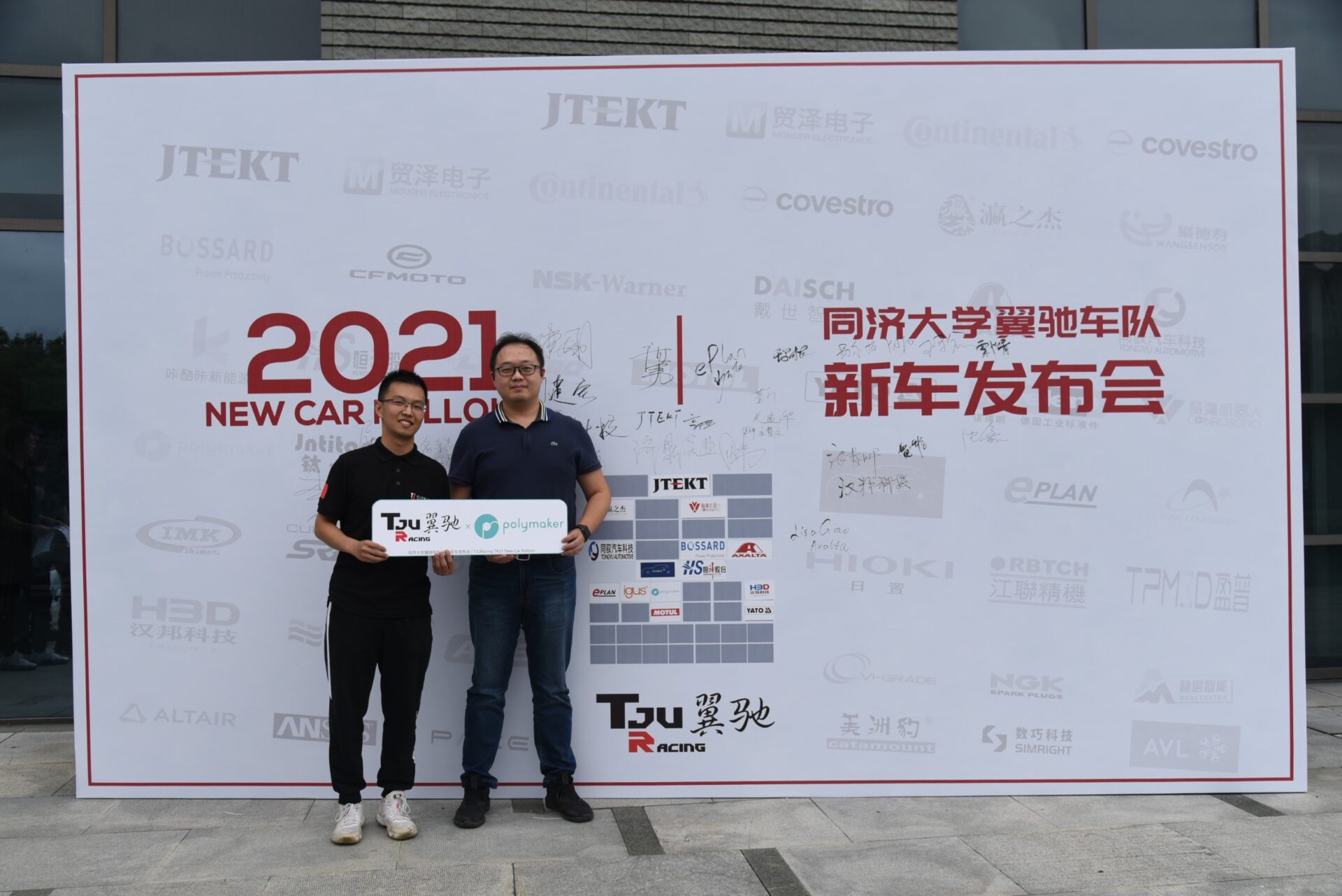
Picture 1 | Polymaker Attended the 2021 New Car Model Public Announcement of TJU Racing Team
The TR21 is the 14th racing car independently designed and manufactured by the TJU Racing Team. The new model achieves significant innovations over previous models, oftentimes by using Polymaker’s 3D printing materials.
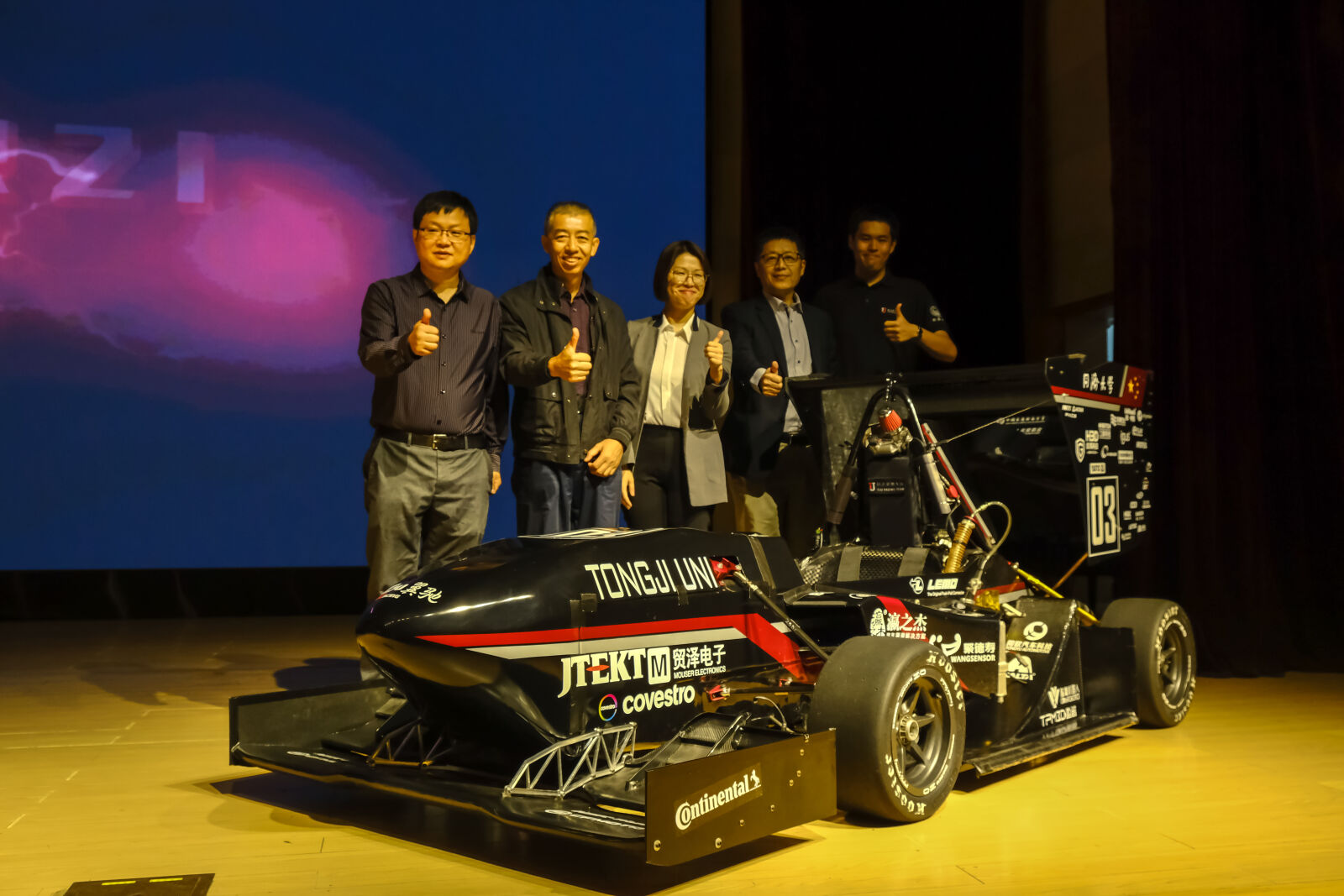
Picture 2 | Picture Stripes of TR21 Public Announcement
Strong Power Core
With the Triumph 675 3-cylinder engine as its power core, the TR21 uses a dry lubrication system, dual-cycle cooling system, and a more stable fuel supply system. The model is also equipped with a pure titanium exhaust muffler and hollow titanium alloy half-axles to reduce weight more efficiently. Having the power core and newly developed variable intake system work together heightens the performance of each part even further.
New Body Structure
The TR21 adopts the body structure of a full monocoque, replacing the former structure of a mono-frame. The carbon fiber layer, aluminum honeycomb panels, and PMI foam are used to provide higher strength and torsional stiffness while also keeping the body lightweight to ensure ideal weight distribution. Key parts of the body, like monocoque inserts and aerodynamic wing ribs, use PolyMide™ CoPA from Polymaker as the base material to give the parts structural stiffness.
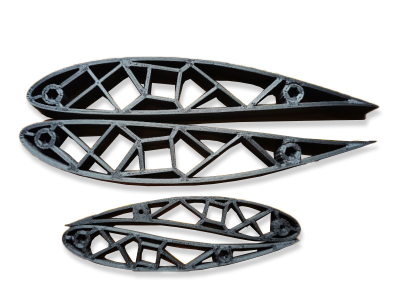 Picture 3 | 3D-printed Front Wing Rib using PolyMide™ CoPA
The PolyMide™ product series are 3D printing filaments developed from Nylon. By adopting Polymaker’s patented Warp-Free™ technology, PolyMide™ products not only have the same engineering performance as typical Nylon materials but are also easy to print with a minimum size limit. PolyMide™ CoPA was developed from a copolymer of Nylon-6 and Nylon-6,6, a material with balanced mechanical strength and toughness. Along with the good printability, this material gives dimensional stability with its temperature resistance up to 180˚C, making PolyMide™ CoPA an ideal material for parts like gears, engine mounts, pipe connectors, and high-speed airflow pipes that are used in harsh environments.
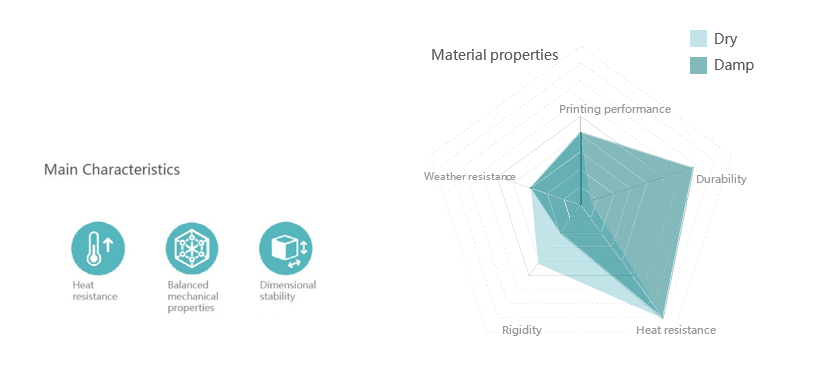
Picture 4 | Main Characteristics and Material Properties of PolyMide™ CoPA
Innovative Aerodynamic Devices Design
The upgraded body and aerodynamic devices of the TR21 are some of its biggest highlights. Aerodynamics, which dominates the car’s design, has always been the ultimate goal for the TJU Racing Team. After observing systematic design processes and multiphysics simulations, the new aerodynamic devices is able to reach a down force of up to 1075N at the speed of 20m/s, improving the car’s external flow and aerodynamic sensitivity while significantly enhancing its curve speed. The flow deflector in the aerodynamic devices was 3D printed using Polymaker’s PolyMax™ PC material. Not only did the 3D printing material increase the car’s aerodynamic performance, but it also greatly reduced the cost and hours required to produce the flow deflector, with the only sacrifice being structural weight.
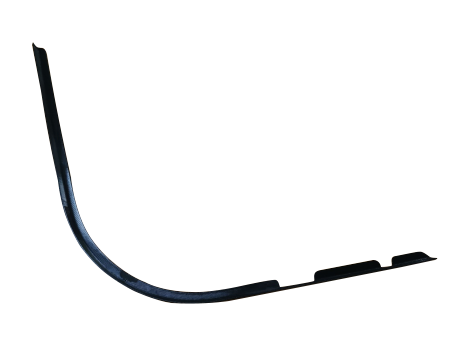
Picture 5 | 3D-printed Tail Deflector Using Polymaker PolyMax™ PC
The PolyMax™ product series are advanced 3D printing filaments produced by Polymaker’s patented Nano-Reinforcement technology, all of which have excellent mechanical properties and printing quality. PolyMax™ PC is a high-performance, polycarbonate-based filament boasting strength, toughness, heat resistance, and printing quality, lending itself to engineering applications, specifically when higher resistance for impact and vibration is needed, like in fixtures and fixing tools, furniture, small motor mounts, UAV, 3D printer parts, etc.
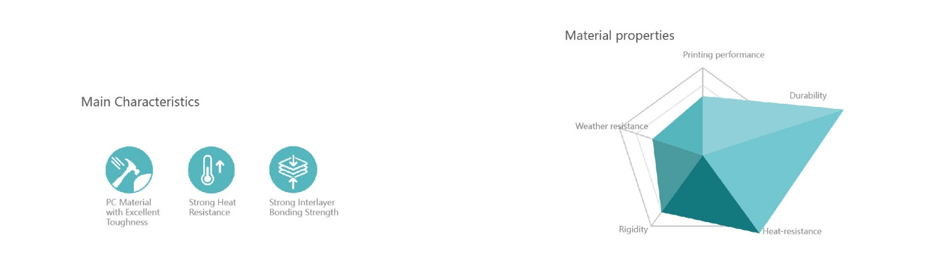
Picture 6 | Main Characteristics and Material Properties of PolyMax™ PC
Polymaker’s Polysmooth™ has also been used to print the front flap variable section, wing, and suspension lug cover for the TR21. Using alcohol-polishing in the materials’ post-processing allows the external flow of the whole vehicle to be optimized.
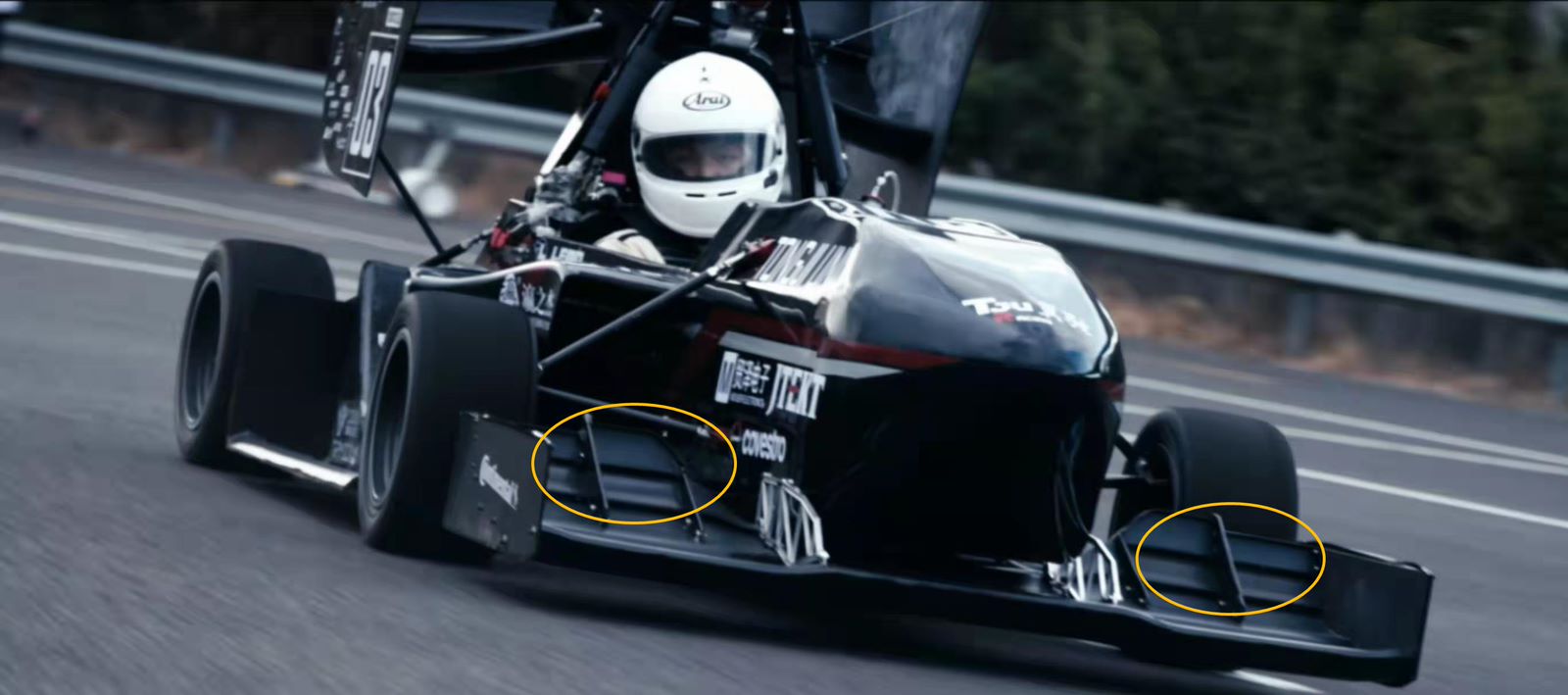
Picture 7 | 3D-printed Front Flap Using Polymaker’s PolySmooth™
PolySmooth™ is a unique and easy-to-print filament, specially designed for "freeing both hands" in post-processing. After printing with this material, Polysher™ is then applied to create a smooth surface. PolySmooth™ helps models that are difficult to polish be post-processed into a smooth surface, like statuettes or role-playing props, making PolySmooth™ optimal for product design and prototype creation as it produces a result similar to injection molding.
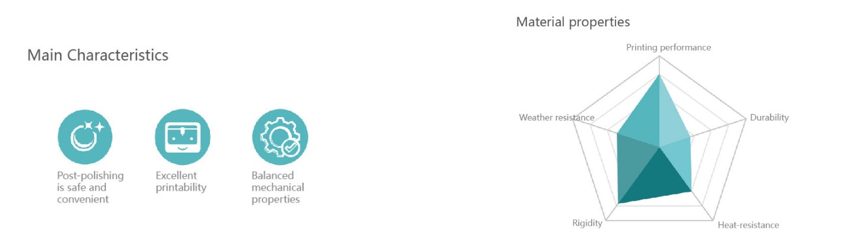
Picture 8 | Main Characteristics and Material Properties of PolySmooth ™
Brand New Chassis System
After a detailed analysis of tire characteristics, the original tires were replaced with Hoosier 16” high-performance racing slick tires. To match this tire, a new chassis system was designed for the TR21, equipped with a brake-by-wire stabilizing system to improve the vehicle’s dynamic performance.
Upgraded Electronic Control System
The TR21 continues to develop its electronic control system, using professional MoTeC ECU to have accurate control of the electronic throttle, pneumatic shift, and variable intake manifold while supporting wireless data acquisition. Also, the new steering wheel controller integrates radio communication, clutch-by-wire, brake-by-wire stability, ejection start control, traction control, and adjustment functions for various strategies, allowing drivers to enjoy its unlimited potential.
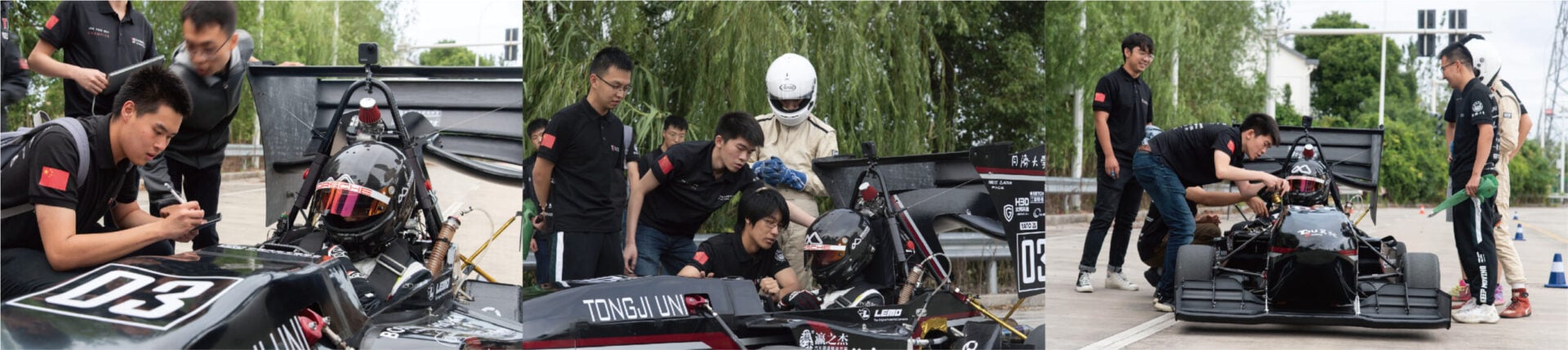
Picture 9 | TR21 Public Announcement Picture Groups
At this event, the TJU Racing Team announced their driverless vehicle plan for the first time, and they hope to see driverless technologies used in the next generation of TJU racing cars when they compete in the University Formula Race.
Polymaker has been actively involved in developing applications of 3D printing technology in the automotive and racing industry. Applying 3D printing materials allows for reduced costs, shortened production cycles, personalized customization, and lightweight parts to a certain extent. The diversity of Polymaker’s filaments also makes crafting different racing car parts more feasible, pushing the application of industrial-grade filament to be even more common. Polymaker's industrial-grade products include reinforced materials based on nylon mixed with carbon fibers and glass fibers, which improves their thermal properties and stiffness for interlayer bonding strength. There are also PC high fire-retardant materials and polymer alloy materials, both of which have high heat resistance and toughness.
We hope that 3D printing technology will be used widely when manufacturing and producing cars and racing cars in the near future.

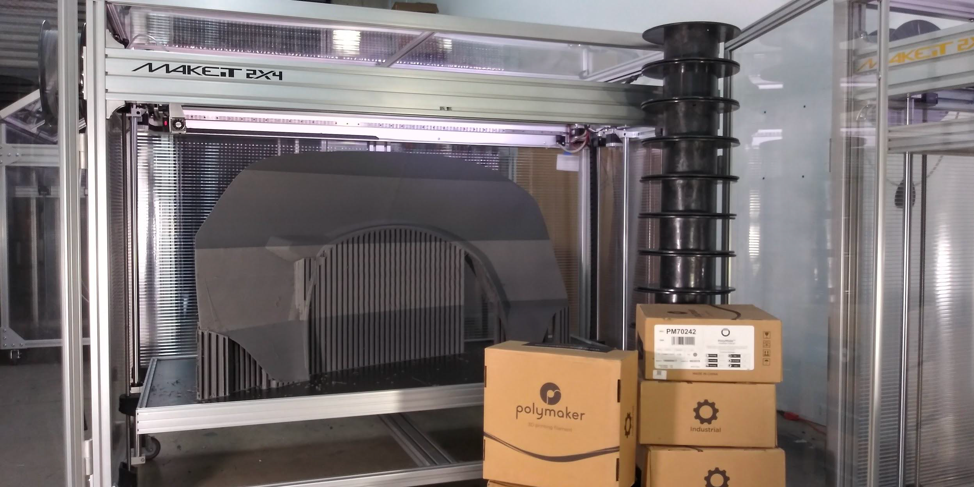
Full size fender plug (1346mm x 660mm) 3D printed on MAKEiT2x4 Large Format 3D printer using PolyMide™ PA6-GF material made by Polymaker.
MAKEiT2x4 is a large format 3D printer able to print an entire quarter panel in one piece with industrial quality filament PolyMide™ PA6- GF from Polymaker. MAKEiT2x4 is designed and made by MAKEiT, Inc. in California.
The printer is equipped with a massive rectangular printing area of 1400x605x800mm and a powerful printhead, this makes it the premier choice for printing large automotive parts, like rectangular-shaped body models. In fact, it is recognized by the automotive aftermarket authority SEMA, the Specialty Equipment Market Association. The SEMA Show 2020 awarded our MAKEiT2x4 large format 3D printer the 2nd Best New Tool and Equipment Product.
With the printer MAKEiT 2x4 car designers and fabricators can print the original fender design, in full instead of different pieces welded together saving the time and energy spent to complete a puzzling process. It counts with an application where you can see the part being 3D printed in real time.
After days of continuous printing, when the model is finally printed and cleaned, you can test fit it right away onto the vehicle. The well tested piece can be used as a plug to make the production mold. Plus, by using the MAKEiT2x4 machine, you can keep all your original designs in house.
Due to the complex nature of making a perfectly smooth body plug, the material used to make the plug needs to be stiff and strong and able to withstand intense heat. After many trials of different kinds of filaments, we have narrowed it down to a couple filaments. Polymaker™ PA6-GF meets all the material requirements for 3D printing a good plug.
With the help of 3D scanning, computer-aided design, 3D printing and the right material, our clients are no longer sculpting clay plugs by hand. They especially love the 3D printing digital mirroring process. With a single click, a mirrored model can be printed automatically. In comparison, making opposite-side plugs perfectly symmetrical by hand is virtually impossible.
We’d like to share the following case study from one of with you from our amazing customers.

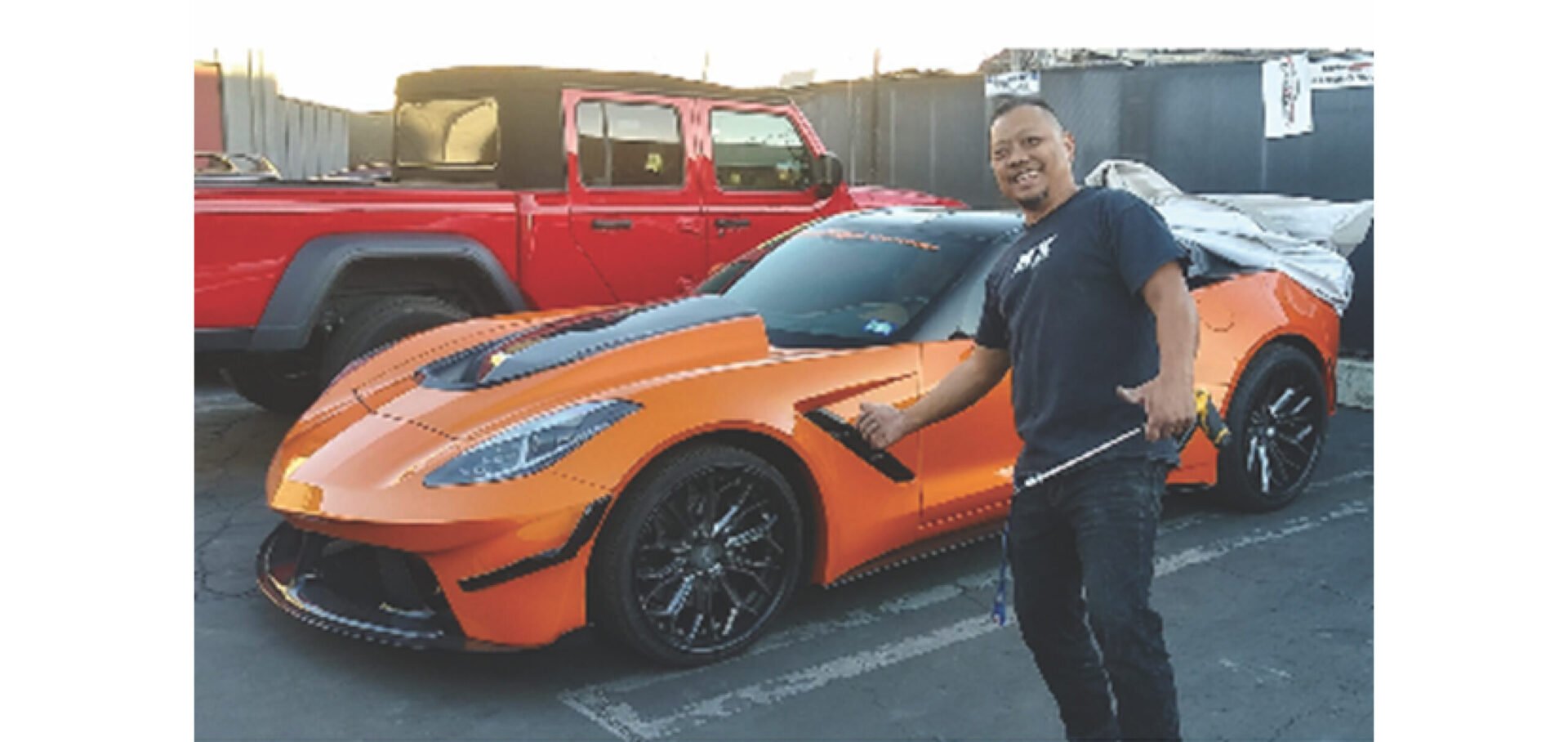
Ivan Tampi, owner of Ivan Tampi Customs, is an award-winning designer and fabricator specializing in widebody Corvette customization. He used to spend weeks making plugs by hand. With the help of MAKEiT2x4's large-format 3D printing technology, he is able to get 3D printed prototypes from the CAD design, without the need for additional tooling. He is now able to do more design work, build more exotic wide body kits faster, all at a lower cost.

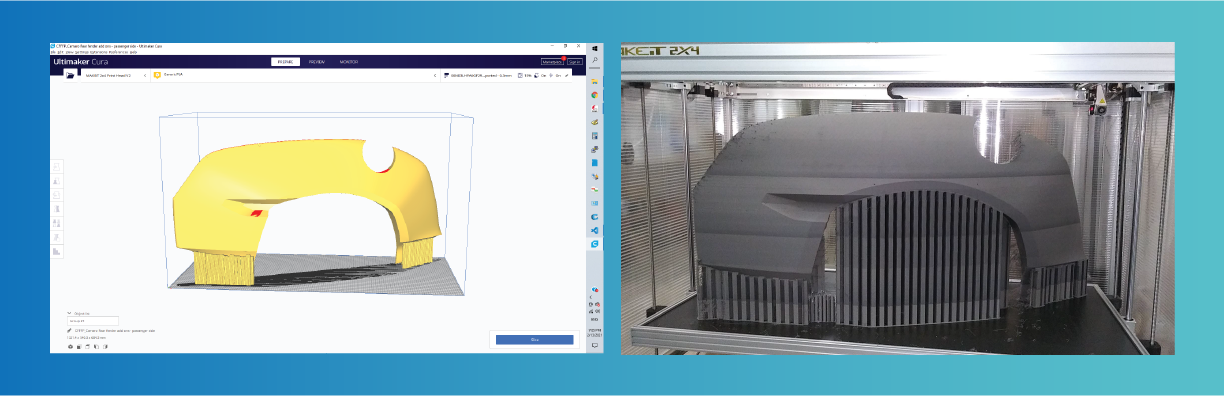
A full-size passenger side rear fender cap is 3D printed on a heated carbon fiber print bed. This bed provides a massive 1400x605x800mm print envelope. The 0.6mm tungsten carbide nozzle on the powerful printer works wonders with the PA6-GF, producing 5 days of non-stop work, (except for the automatic pausing of the printer when the filament runs out). An innovative filament motion sensor detects filament exhaustion and other problems. Once a new roll of PA6-GF is installed, the printer will continue. By nature, PA6-GF is an abrasive and stiff filament. It needs a printing temperature in the range of 285C to 300C and an abrasion resistant nozzle to extrude well. Often, 3D printer bed leveling and calibration can be complicated and time consuming. But this is not the case with the MAKEiT2x4 printer. It has 100% automatic print bed leveling and calibration. The user only has to press a few buttons on the computer screen. The rest is done by the printer itself.
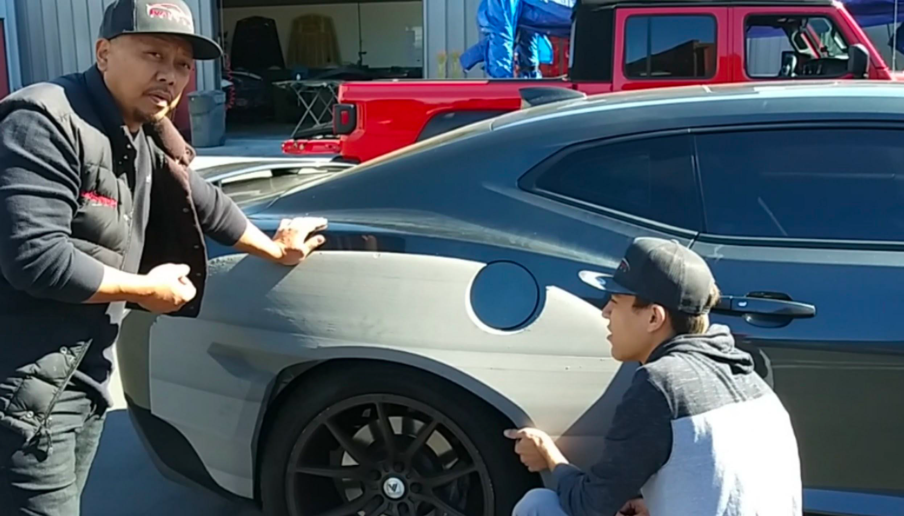
(3D Printed passenger side rear fender plug fitment test by Ivan Tampi Customs)
By using the digital mirroring process, the driver side rear fender is obtainable. This simple process creates a symmetrical model, and it can be 3D printed right away. The finished print is shown here.
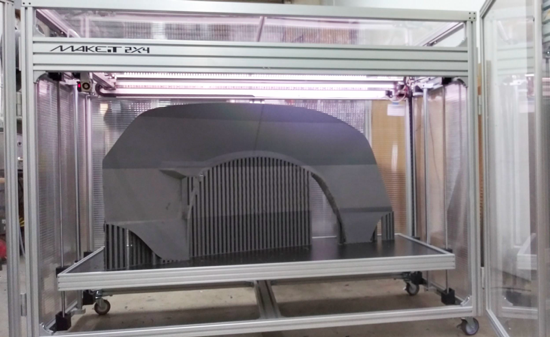
Once the printing starts, we want it to be finished as planned, right? No one wants to see an incomplete
job. However, a random layer shift during printing poses serious risk. It can ruin the entire print. Many 3D printer users have encountered similar issues. It is very costly when printing a large size part. To prevent the "lay-shift", we have implemented the LSP (Lay Shift Prevention) in each 2x4 printer as a standard feature, ensuring reliable printing, job after job. A video clip about LSP can be found here ( https://drive.google.com/file/d/1FW9CdxKvBCXWwAC22lJqaLcFv5UnEByM/view )
A driver-side front fender plug is completed after 7 days of printing. As noted, there is support material and debris attached to the fender print. These can be easily removed before the fitment test.
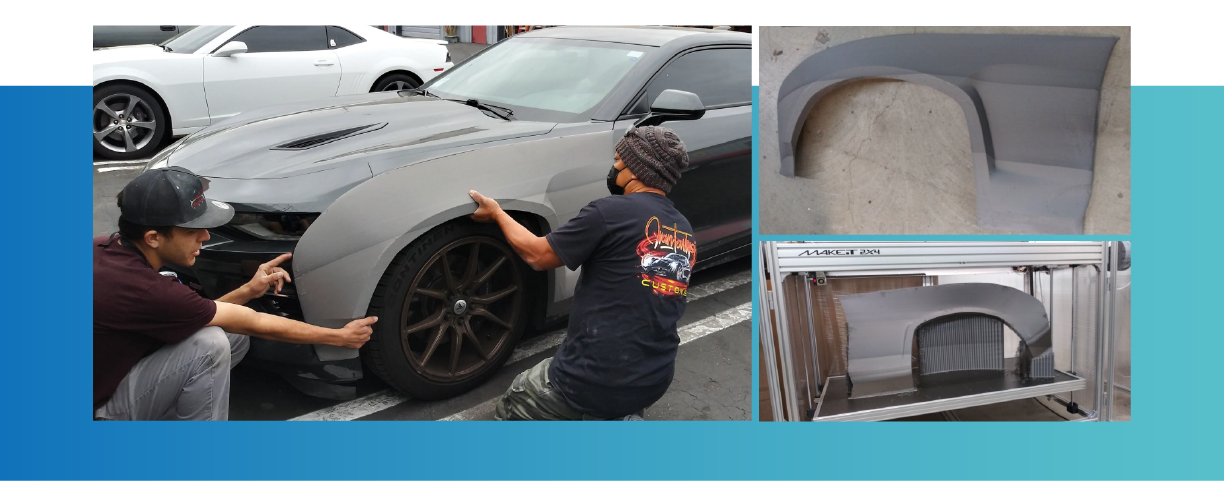
After an initial fitting, the fender plug will be power sanded to make it as smooth as possible. During sanding, the nylon glass fiber print remains stable, unlike PLA. It doesn’t gum or melt at all! This is huge. The old headache of “how do I sand it” has become “I love it. I can sand it easily, as many times as I want.” Often, regular post processing filler materials like Bondo are applied onto the plug before next sanding.
While the printer is running on its own, a MAKEiT2x4 user can monitor the printing process, and control the printer remotely using a smartphone. When you visit your customer, you can show their part being 3D printed in real time!
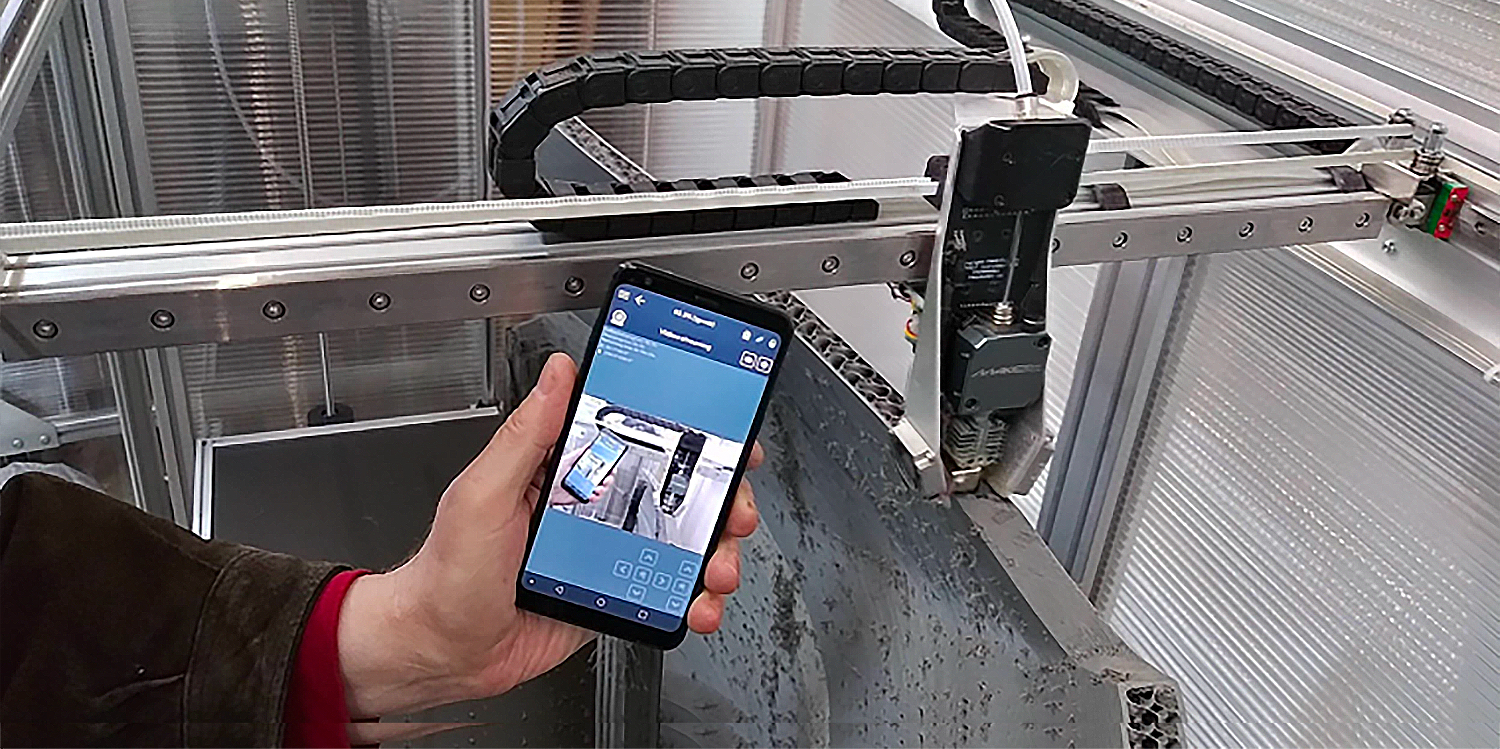

According to Ivan, MAKEiT 3D printing technology has saved his company 75% of time and labor compared with their traditional plug-making process. 3D printing also ensures every part is symmetrical and keeps the harmonious proportion all the way through. Compared with other filaments earlier, PolyMide™ PA6-GF has become Ivan’s only go-to material. Nowadays Ivan Tampi Customs is able to turn their unique digital designs into real functional parts in days and weeks, and no extra tooling is involved.
Ivan’s beautiful widebody exotic cars can be found at:
Instagram: @custom_car_builder; @ivantampicustoms
Website: www.ivantampicustoms.com
MAKEiT2x4 Large Format 3D Printer is designed and built in California USA by MAKEiT, Inc.
Website: www.makeit-3d.com
Instagram: @largeformat3dprinter
Email: [email protected] for purchase and resale opportunity
Sarolea is a revived Belgian motorcycle manufacturer that took on the historic Sarolea brand after the original company ceased production in the 1960’s. The revived brand now focuses solely on electric powered motorcycles, but at the heart of the company is the same passion of motorcycles that founded the original brand back in 1850.
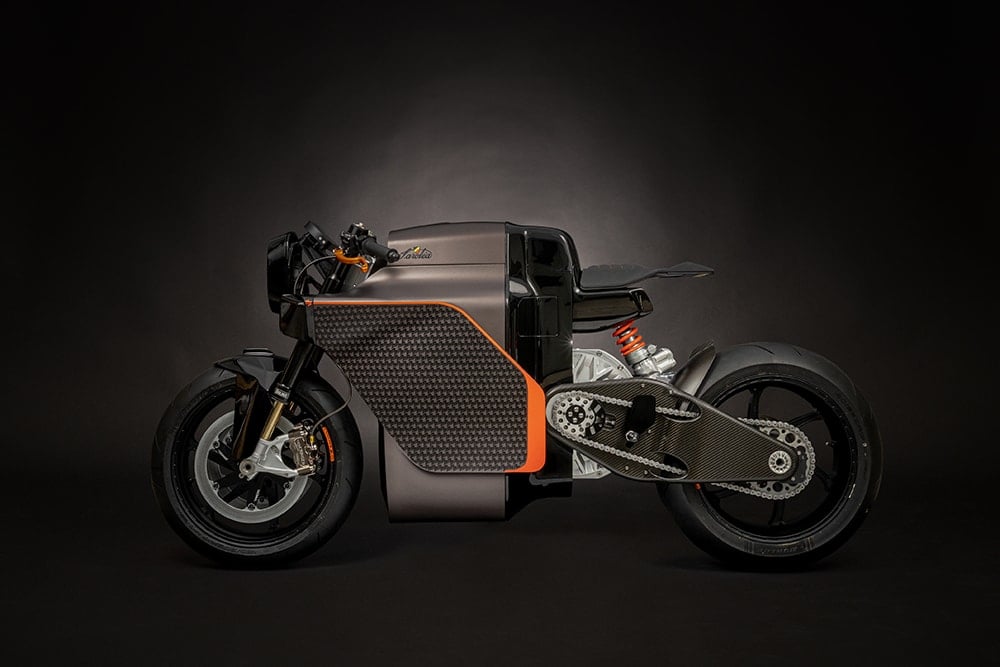
Sarolea develop and manufacture their motorcycles from the ground up using in house technologies originally developed for track racing bikes. After gaining popularity of their designs on the race track, Sarolea decided to design a road going version of their first race bike the Manx 7. Sarolea have been using 3D printing technology at each stage of their production process and have established close technical relationship with Polymaker.
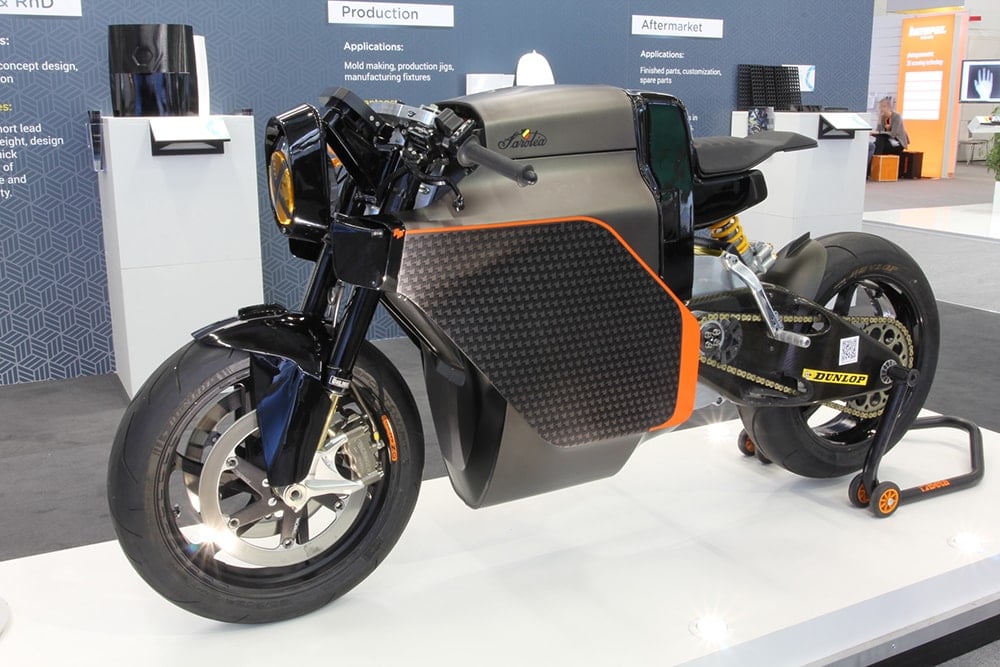
3D printing technology can bring huge advantages to the automotive industry in all aspects. Sarolea has integrated 3D printing into every stage of their production cycle, utilizing many different materials and their unique properties in the design, production and ultimately for the manufacture of parts that operate on the road and race bikes.
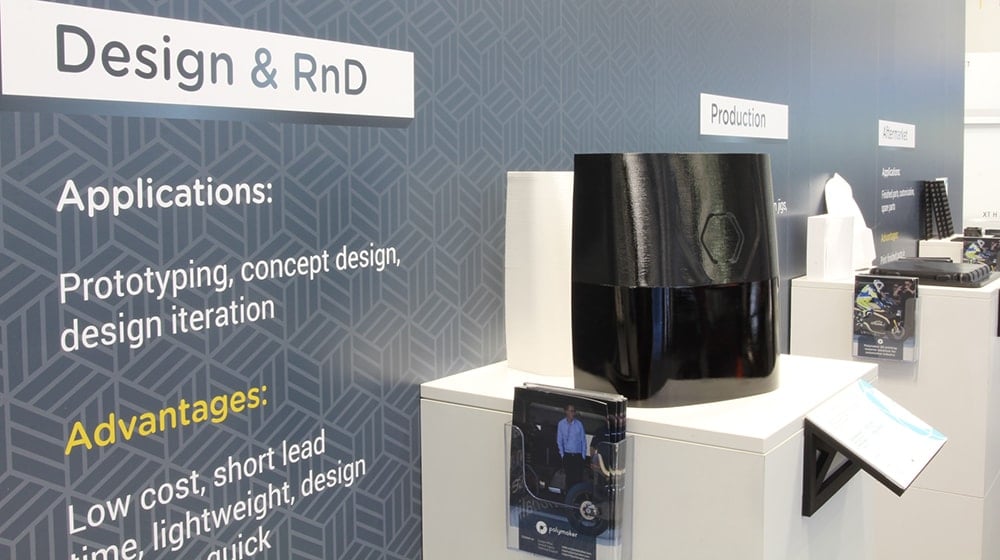
Stage 1: Design & RnD
Applications: Prototyping, concept design, design iteration
Advantages: low cost, short lead time, lightweight, design freedom, quick verification of appearance and functionality.
Description:
Both PolyMax ™ PLA and PolyMax ™ PETG are used for prototyping. For the Manx 7 electric superbike, the entire bodywork was prototyped using PolyMax ™ PLA. The printability, reliability and toughness play a role in this application. On the N60 model, Sarolea used PolyMax ™ PETG for bodywork prototyping. Compared to PolyMax ™ PLA, PolyMax ™ PETG is easier to sand and polish, offering an additional 20°C heat resistance compared to PLA. This allowed Sarolea to print and test body work with a professional finish.
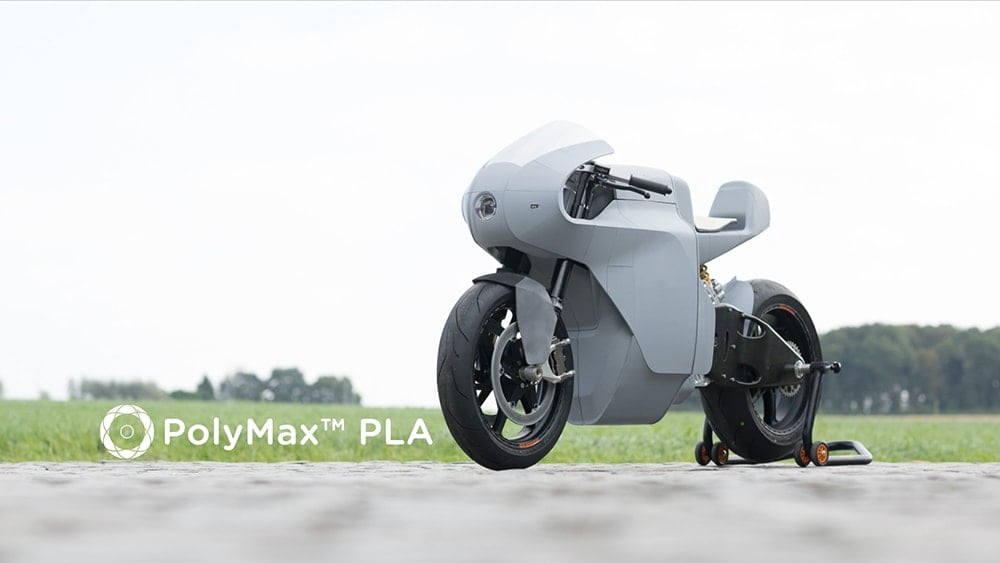
PolyMax ™ PLA for bodywork prototyping
PolyMax ™ PETG for bodywork prototyping
Stage 2: Production
Application: mould making, production jigs, manufacturing fixtures
Advantages: fast and low-cost manufacturing of specific tools for custom parts, effectively reduce production cycle by printing in house. Print negative moulds for direct carbon fibre lay-up.
Description:
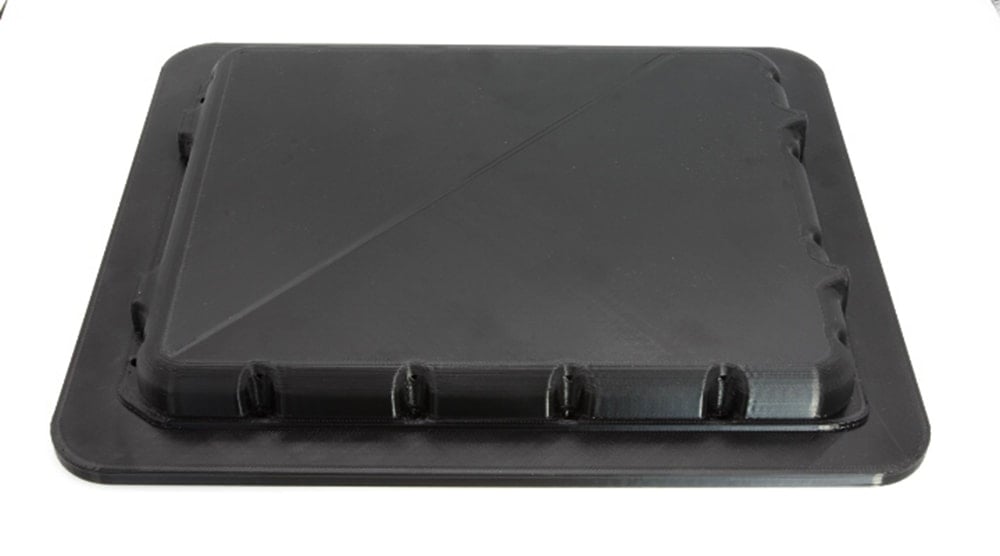
Sarolea are 3D printing moulds in PolyMide™ CoPA which they are using to produce final parts in carbon fibre. Both the Manx 7 and N60 have a carbon fiber monocoque chasis, this requires a number of intricate moulds that help with the lay up of the carbon fibre. PolyMide™ CoPA can withstand the high heat and pressures involved in vacuum curing process while the carbon fiber is baked in the autoclave. PolyMax™ PETG is also widely used to make production tools, jigs and fixtures necessary when assembling the bikes.
PolyMide™ CoPA mould
Stage 3: Aftermarket
Application: Printing production ready parts, customization and spare parts
Advantages: Print finished parts in advanced materials, provide full customization to customers on existing parts, keep digital database of spare parts.
Description:
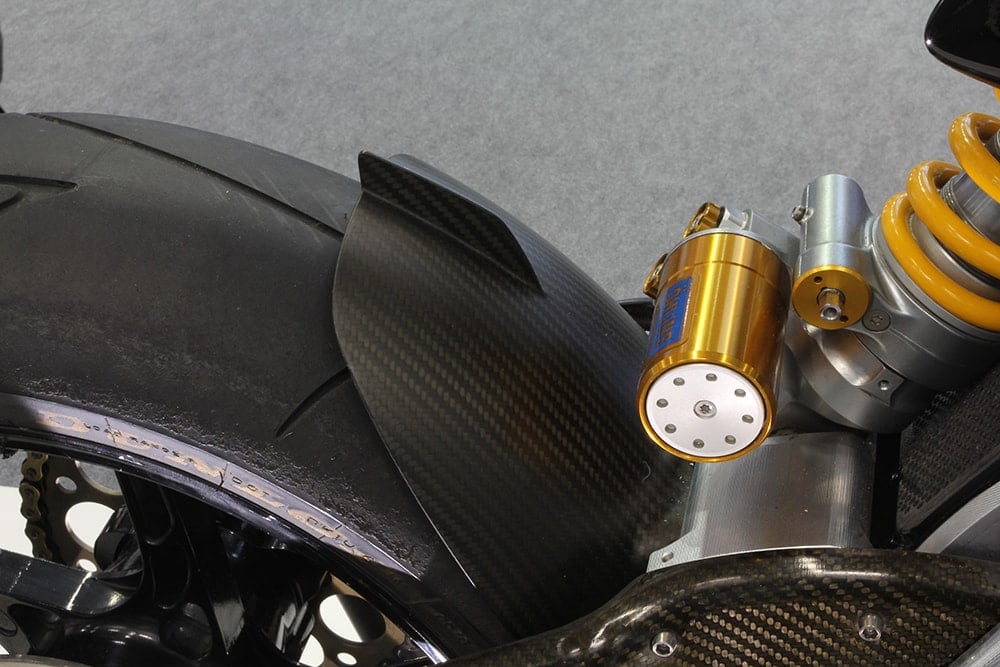
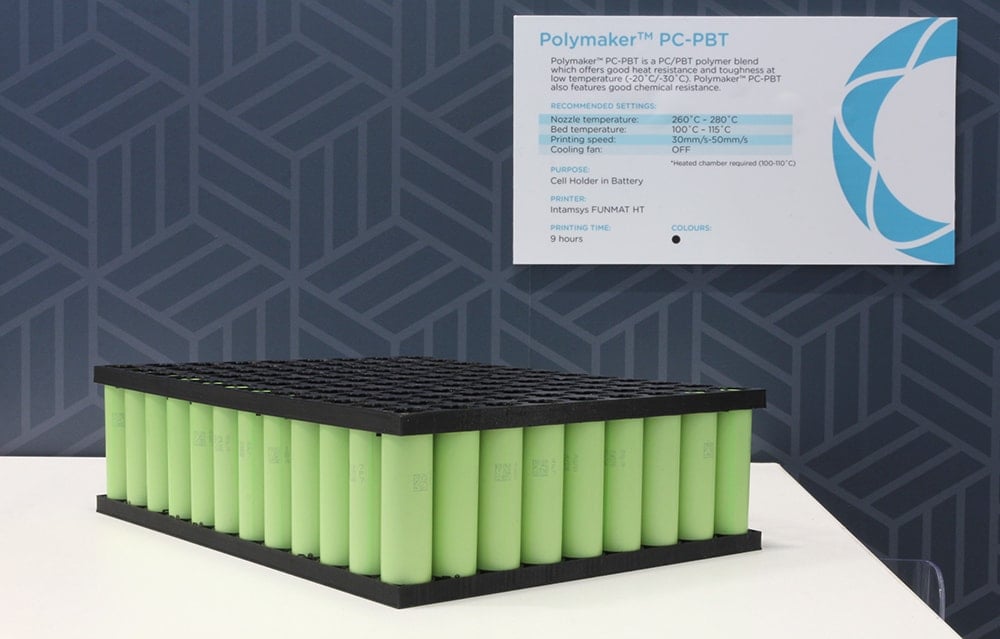
Sarolea features a number of 3D printed parts in final production thanks to the advanced materials that Polymaker offer. PolyMide™ PA6-CF is used widely in the high velocity air flows and Polymaker™ PC-PBT in use as a cell holder within the custom-made batteries. PolyMax™ PC-FR offers a fire rated material to print fixtures and holdings for the many high voltage circuits and wires that are necessary to run the bike.
 Polymaker™ PC-PBT cell holder
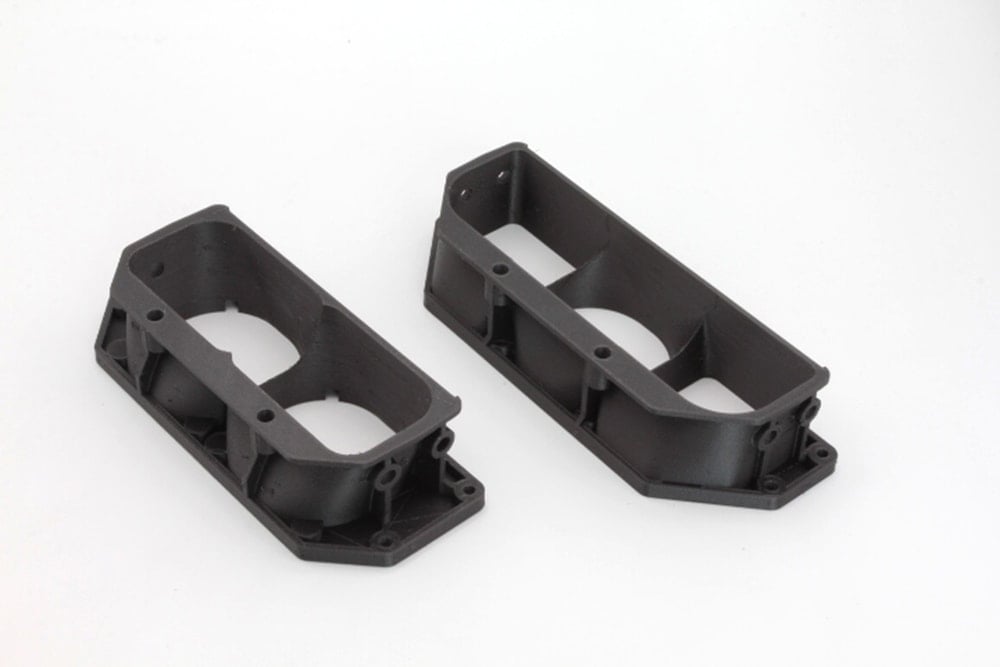 PolyMide™ PA6-CF air duct
Sarolea has found that Polymaker materials are an invaluable tool not only in prototyping but also in the manufacturing and final production of parts for their motorbikes. The technical partnership between the two companies allows Sarolea to push the boundaries of vehicle electrification.
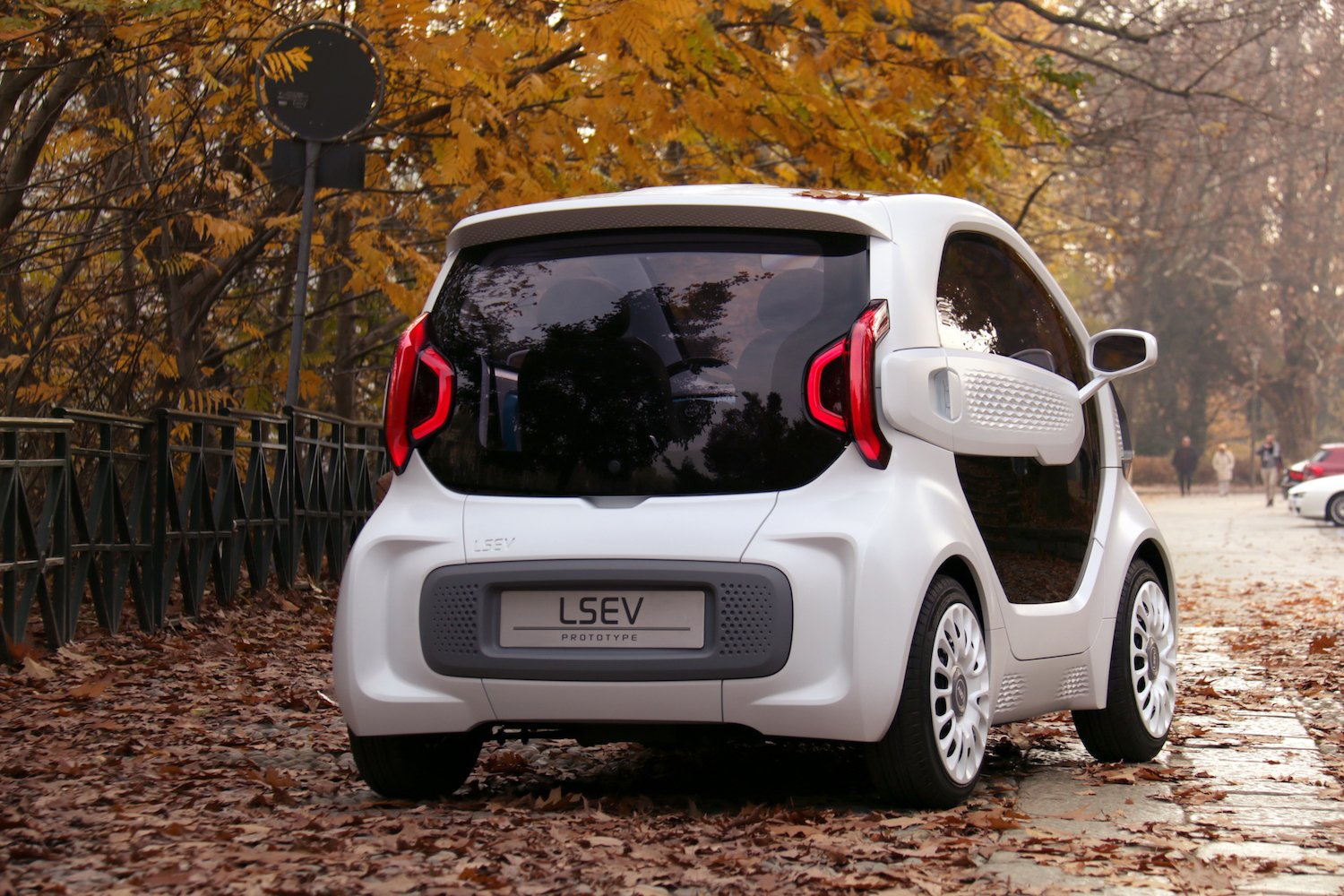
Italian electric car company XEV and 3D printing material company Polymaker organized a joint press conference at the China 3D-Printing Cultural Museum in Shanghai. The first mass-producible 3D-printed electric car in the world was launched and shown to the public.
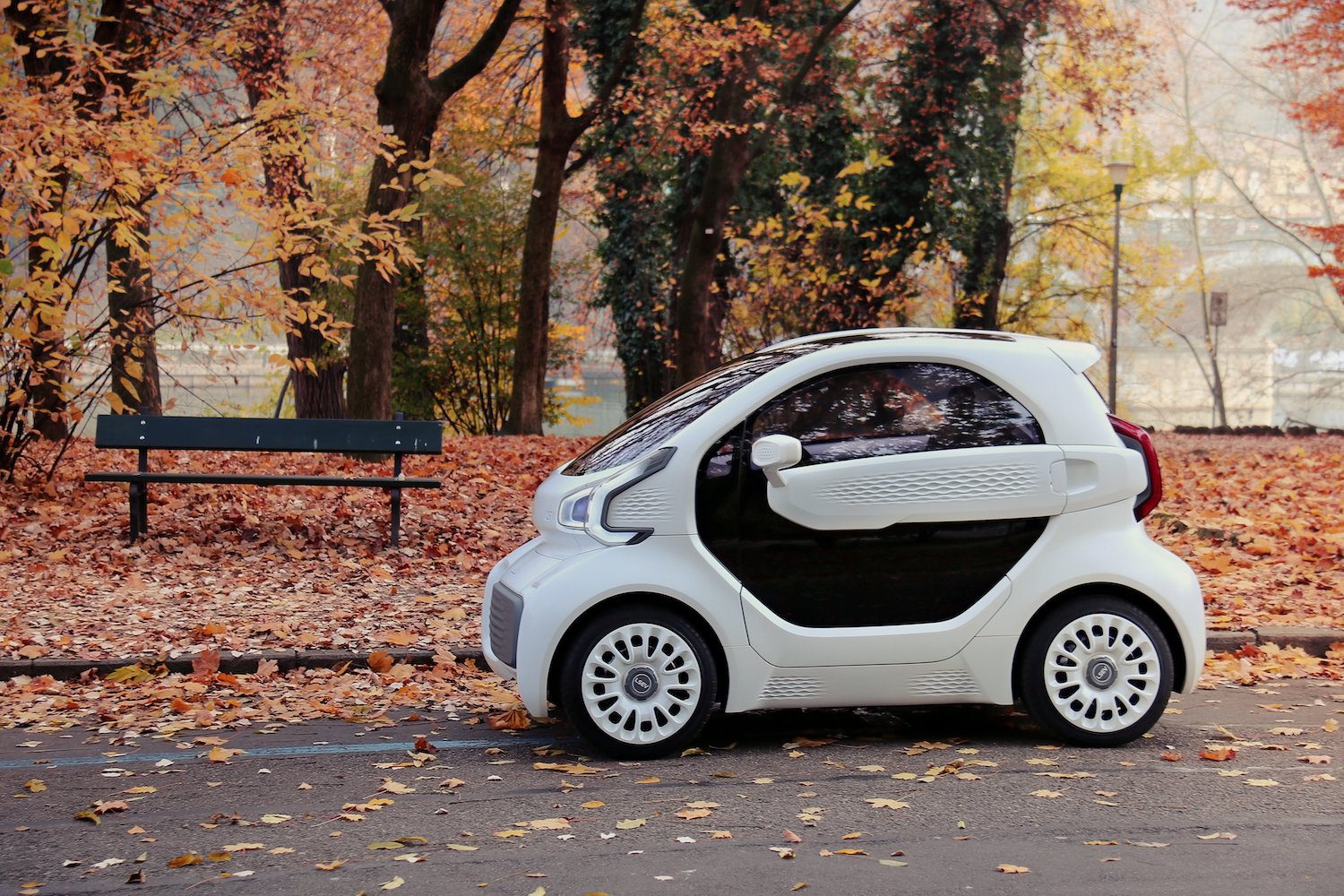
Although this new vehicle attracts much attention, this conference is not just about launching and exhibiting the car. It is more about how 3D printing technology brings revolutionary changes to automotive manufacturing industry. This car, named LSEV, could be the milestone product in the adoption of 3D printing into mainstream production.
“XEV is the first real mass production project using 3D printing. By saying real, I mean there are also lots of other companies using 3D printing for production. But nothing can really compare with XEV in terms of the size, the scale, and the intensity.” Said, Dr. Luo Xiaofan, the co-founder and CEO of Polymaker.
XEV CEO, Stanley said that “after the research and investigation of the global auto market, they decided to design a small electric vehicle that can achieve C2M (Customer-to-Manufacturer) manufacturing which is stated as a main goal of the Industry 4.0 strategy.”
To fulfill this target, it requires mass customization production, fast and cost-effective R&D, and the ability to produce lighter-weight parts that could lead to greater fuel efficiency.
“And then, 3D printing technology becomes the only way to realize it”, said Stanley.
Surely there are many difficulties when utilizing 3D printing technology in auto volume production, Polymaker was chosen as the strategic partner and successfully helped XEV to solve them, not only with material solutions, but also post-processing options in-line with the automotive industry.
“Without Polymaker, we couldn’t make this happen. We really like our interactions with Polymaker, this can be called as know-how combination. Without this kind of interaction, we also couldn’t find the solution we have today. So, we really appreciate what Polymaker do and create for us, we are like brothers, not just strategic partners.” said, Stanley.
Polymaker developed dozens of kinds of engineering plastics for XEV to meet their needs of practical applications. As a result, 3 crucial achievements have been accomplished.
XEV has decreased the plastic parts and number of components in a car from more than 2,000 to 57, and the finished LSEV weighs only 450 kilograms, much lower than similar sized vehicles usually weighing between 1 and 1.2 metric tons.
Apart from the chassis, seats and glass, all the visible parts of the car are made by Polymaker materials through 3D printing. This switch of production leads to more than 70 percent reduction of the investment cost in comparison with a traditional production system.
Conventionally the R&D process of a car model takes about 3-5 years, but it only takes XEV 3-12 months to finish a new design.
Polymaker have also come up with solutions to help with surface treatments and color. These solutions are enormously helpful in customized production and 3D printing volume production.
XEV has already received 7000 orders from Europe even before mass production commences. 5000 orders come from Poste Italiane. And the other 2000 orders come from ARVAL, a vehicle leasing company fully owned by BNP Paribas. XEV plans to start production in the second quarter of 2019.
This strategic partnership between XEV and Polymaker leads to a revolutionary change in automotive manufacturing. It is possible that similar changes, related with 3D printing technology, will happen to every aspect of manufacturing very soon. As Polymaker proves that the 3D printing materials they provide are ready for not only end-use parts but also mass production of finished products.